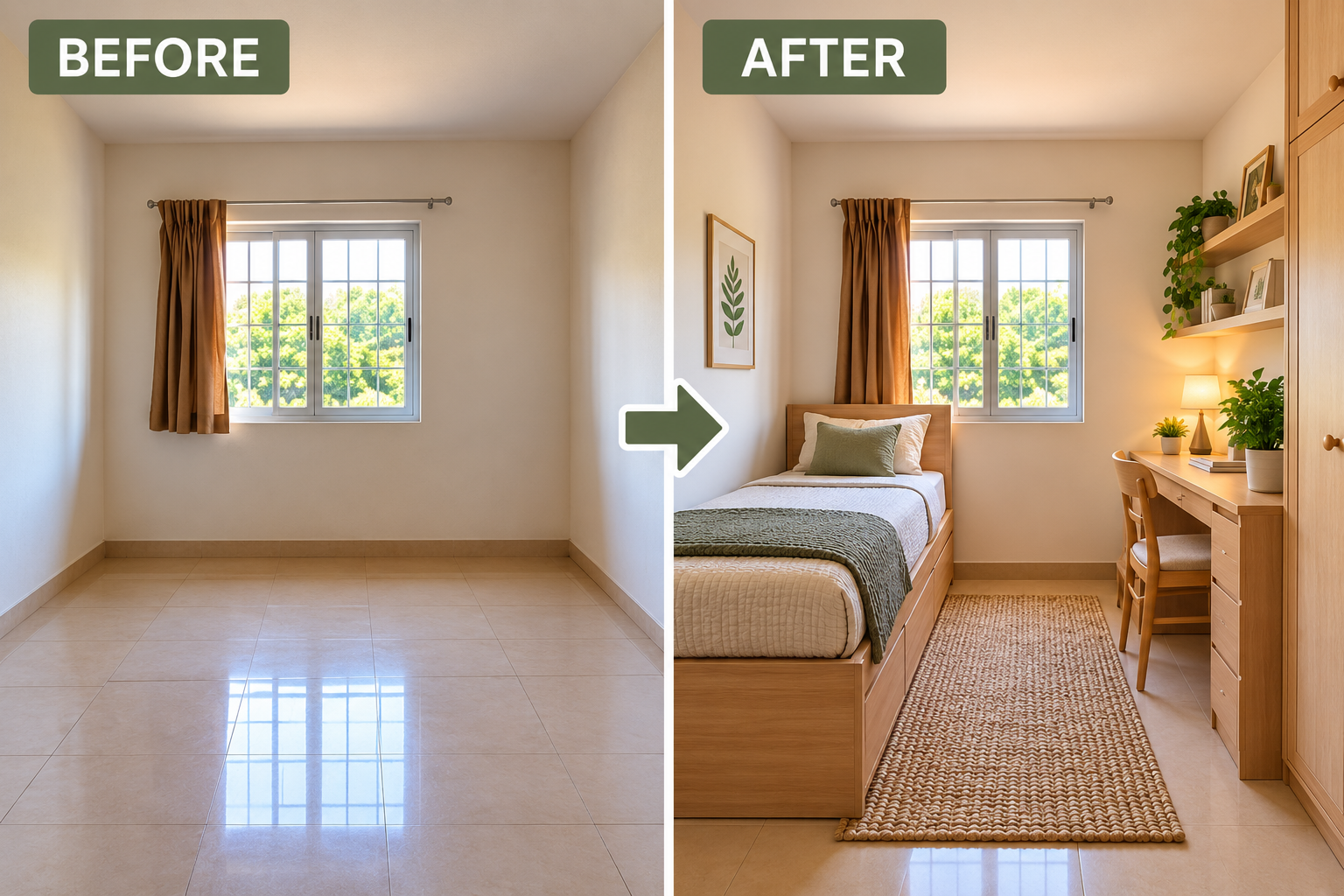
A small bedroom does not have to feel cramped. Although you cannot change the room's square footage without renovating, you can make it feel more open, functional, and comfortable. The key is to reduce visual clutter, make better use of overlooked spaces, and choose furniture that fits the room rather than overwhelms it.
Before making changes, consider how you actually use the bedroom. Do you need a desk, extra clothing storage, or simply a restful place to sleep? Prioritizing the room's essential functions will help you avoid filling it with furniture or decor that does not earn its place. Start with the ideas below, focusing first on the changes that address your biggest space challenges.
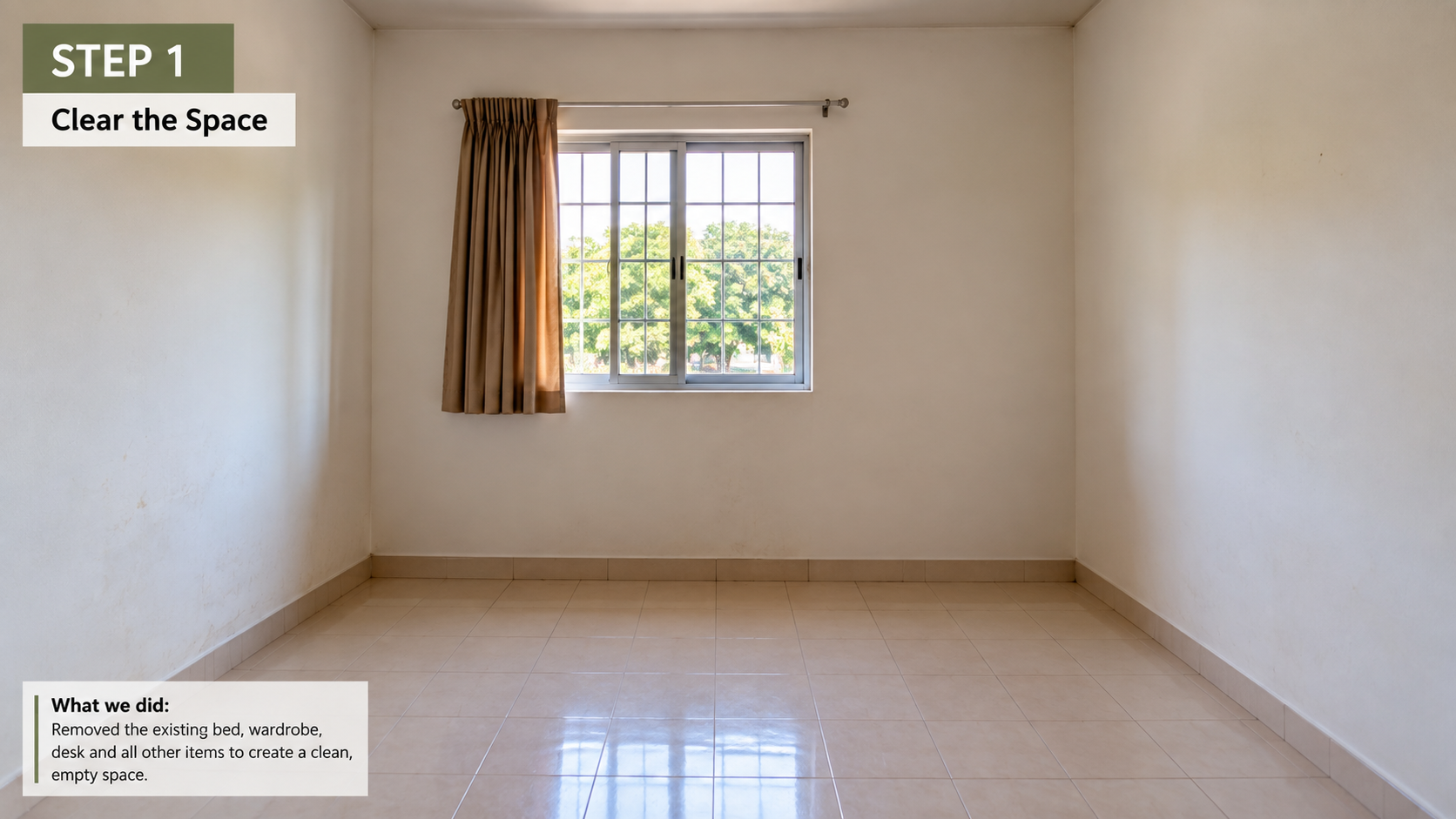
Step 1: Clear the Space
Start with a clean, uncluttered room so you can see the available space and plan the layout before adding furniture.
1. Choose Furniture That Matches the Room's Scale
Oversized furniture can make a small bedroom feel crowded, even when it contains only a few pieces. Measure the room, doorways, windows, and walking paths before buying anything new. Leave enough clearance to open drawers and closet doors comfortably.
A full-size bed may work better than a queen-size bed in some rooms, while a narrow nightstand can provide the storage you need without blocking movement. Look for furniture with slim frames, shallow depths, and clean lines. Pieces with visible legs can also make the floor appear more continuous, creating a lighter visual effect.
2. Keep the Main Walking Path Clear
A room feels smaller when you must turn sideways or navigate around furniture. Arrange the bed and other large pieces so there is a simple, unobstructed route from the doorway to the bed and closet.
If possible, avoid placing furniture where it interrupts the natural path through the room. Try positioning the bed against the longest uninterrupted wall, but test more than one layout before settling on an arrangement. Painter's tape can help you mark furniture dimensions on the floor without repeatedly moving heavy pieces.
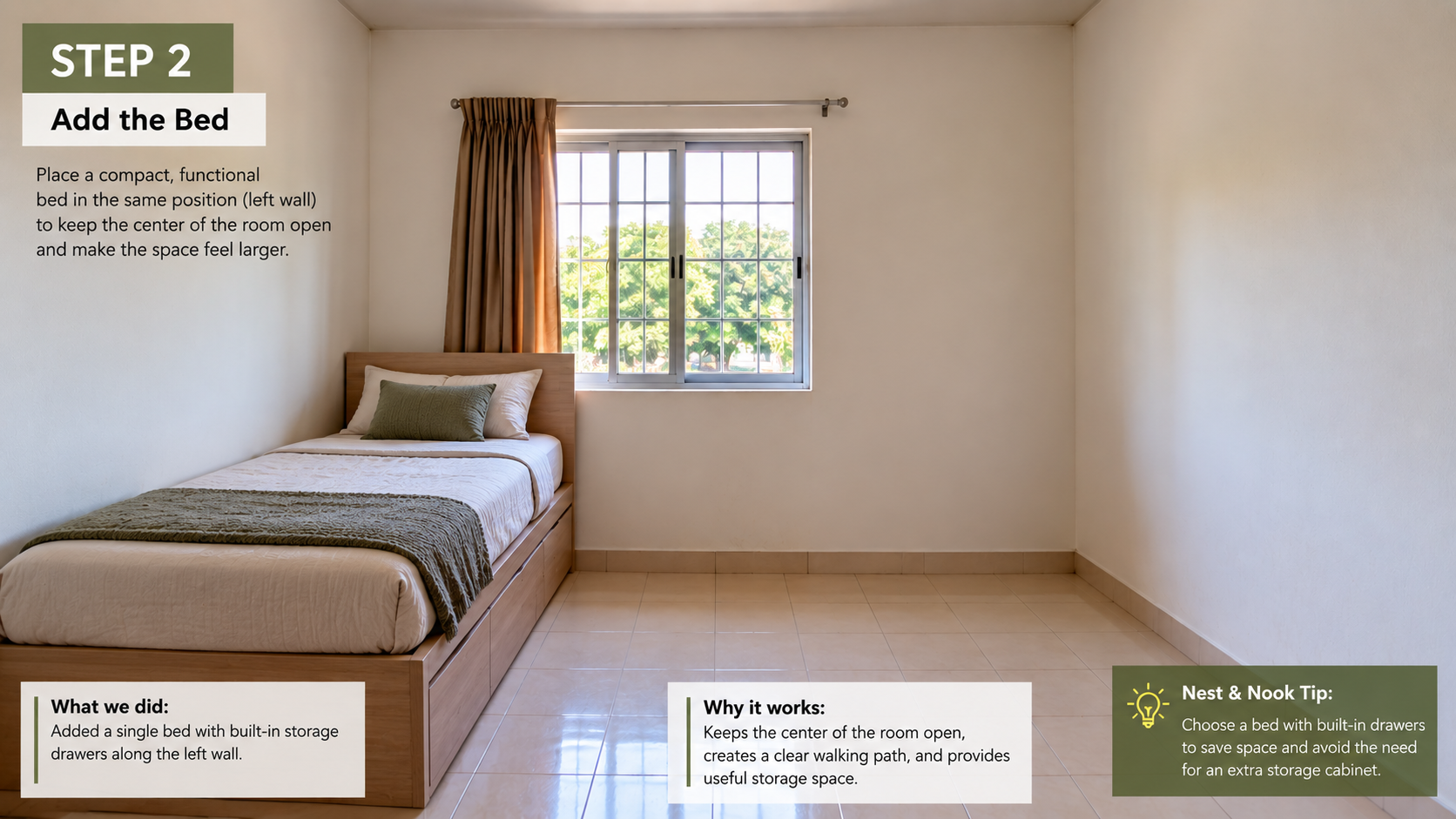
Step 2: Add the Bed
Position the bed carefully, leaving a practical walking path and enough clearance around the main furniture.
3. Use the Space Under the Bed
The area beneath the bed provides valuable storage, especially when the room lacks a large closet. Use low-profile bins, drawers, or zippered fabric containers to hold off-season clothing, extra bedding, shoes, or infrequently used items.
Choose matching containers that fit completely under the frame so the room still looks tidy. Label each container to prevent the area from becoming a forgotten catchall. If your bed sits too low, sturdy bed risers may provide additional clearance, but make sure they are designed to support the bed's weight and remain stable on your floor.
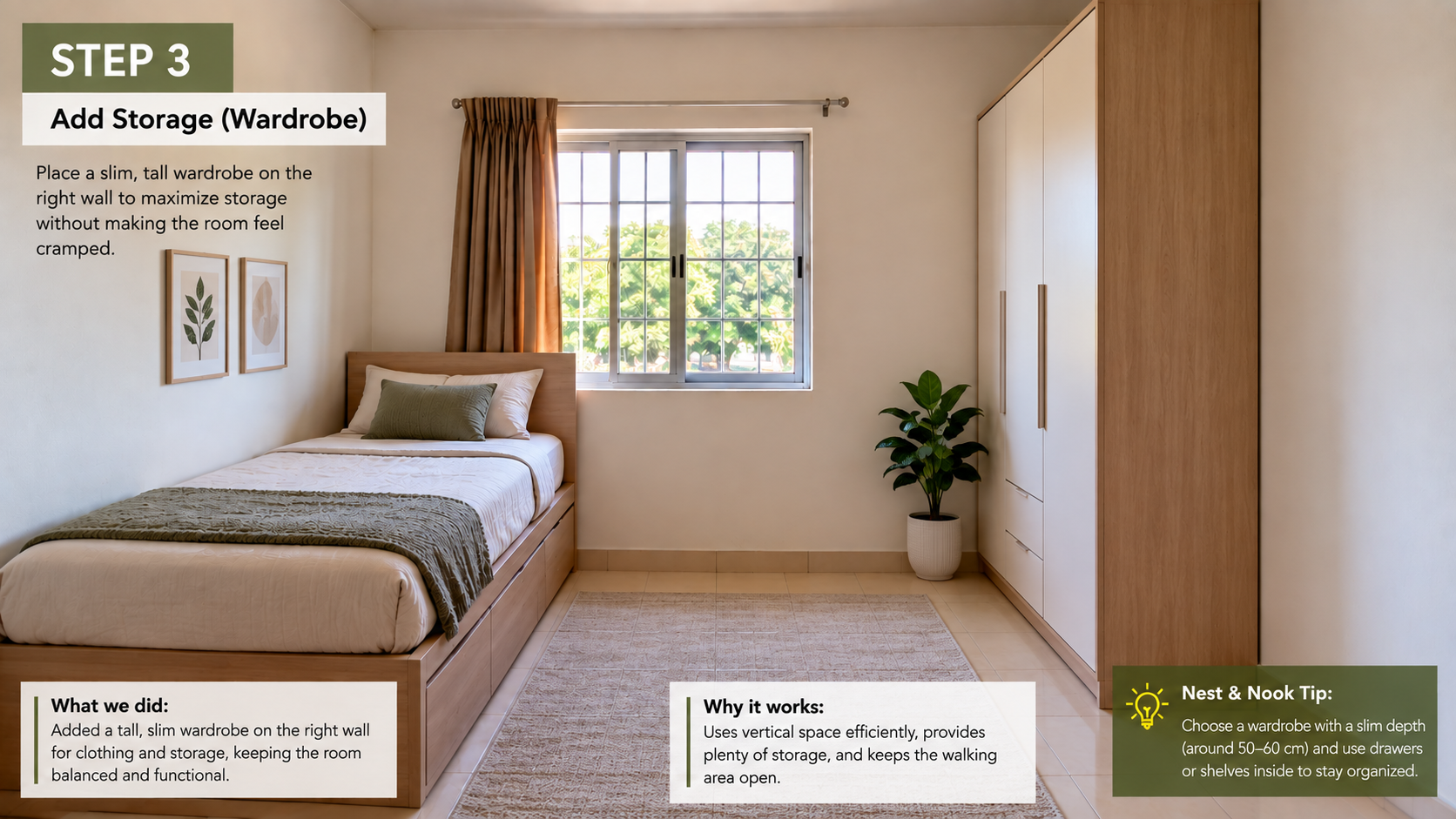
Step 3: Add Storage
Use a compact wardrobe and other vertical storage to increase capacity without taking over valuable floor space.
4. Move Storage Up the Walls
When floor space is limited, vertical storage can provide extra capacity without making the room difficult to navigate. Install shelves above a desk, dresser, or headboard for books, baskets, and lightweight decor. A tall, narrow bookcase is often more space-efficient than a short, wide one.
Keep frequently used items within easy reach and reserve high shelves for things you need less often. Avoid covering every wall from floor to ceiling; leaving some open space prevents vertical storage from feeling visually heavy. Always secure tall furniture and wall-mounted pieces according to the manufacturer's instructions.
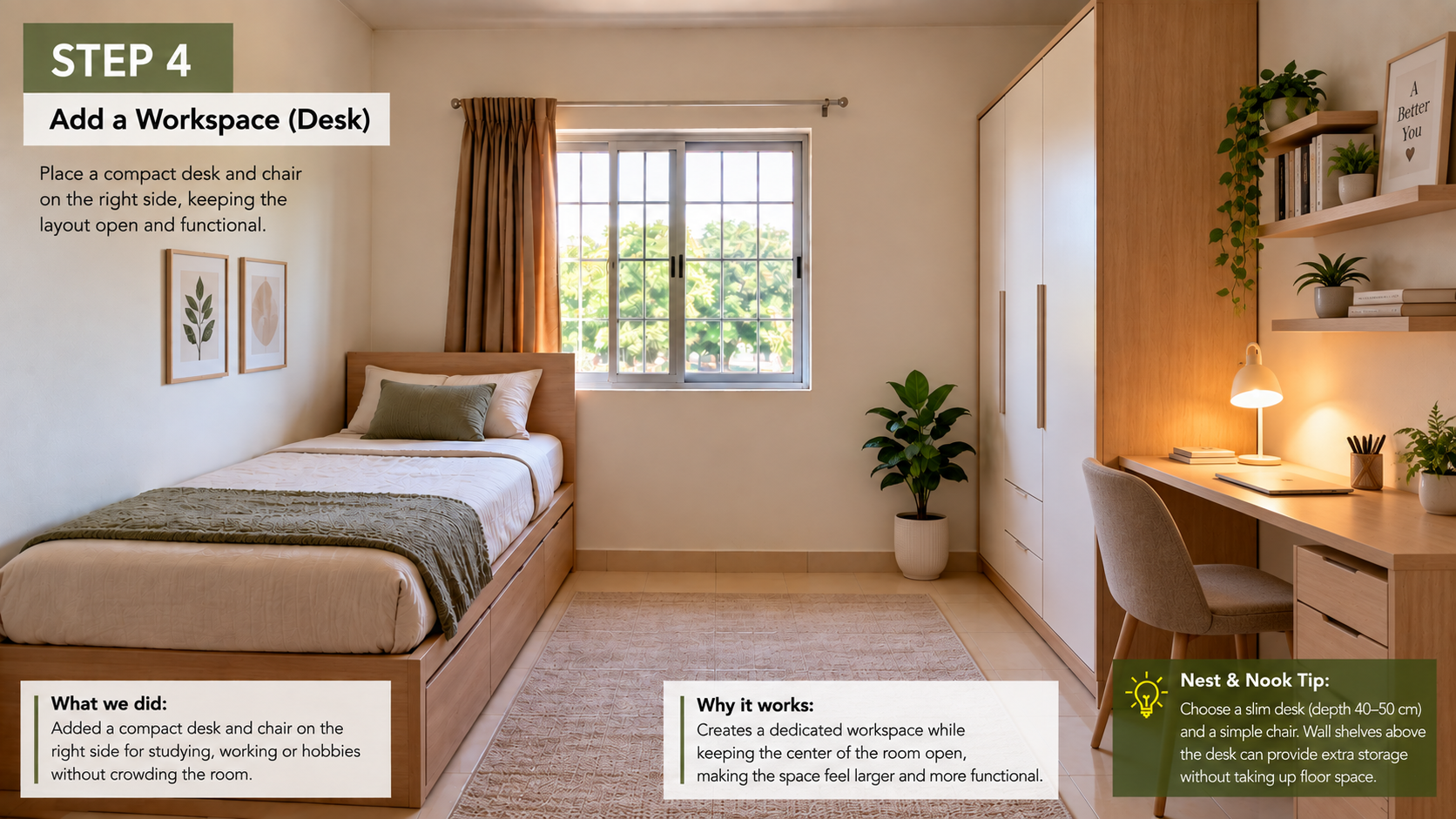
Step 4: Add a Workspace
If the bedroom needs a work area, choose a compact desk that fits naturally into the layout.
5. Replace Bulky Pieces With Multipurpose Furniture
Furniture that serves more than one purpose reduces the total number of pieces a small bedroom needs. A storage bed can eliminate the need for separate under-bed bins, while a nightstand with drawers can hold clothing or personal items. A compact desk can also serve as a vanity, and a storage bench can provide both seating and a place for extra blankets.
Focus on combinations that support your routine. There is little benefit to buying a bench, desk, or ottoman simply because it offers hidden storage if you will not use the piece itself. Multipurpose furniture works best when both functions are genuinely useful.
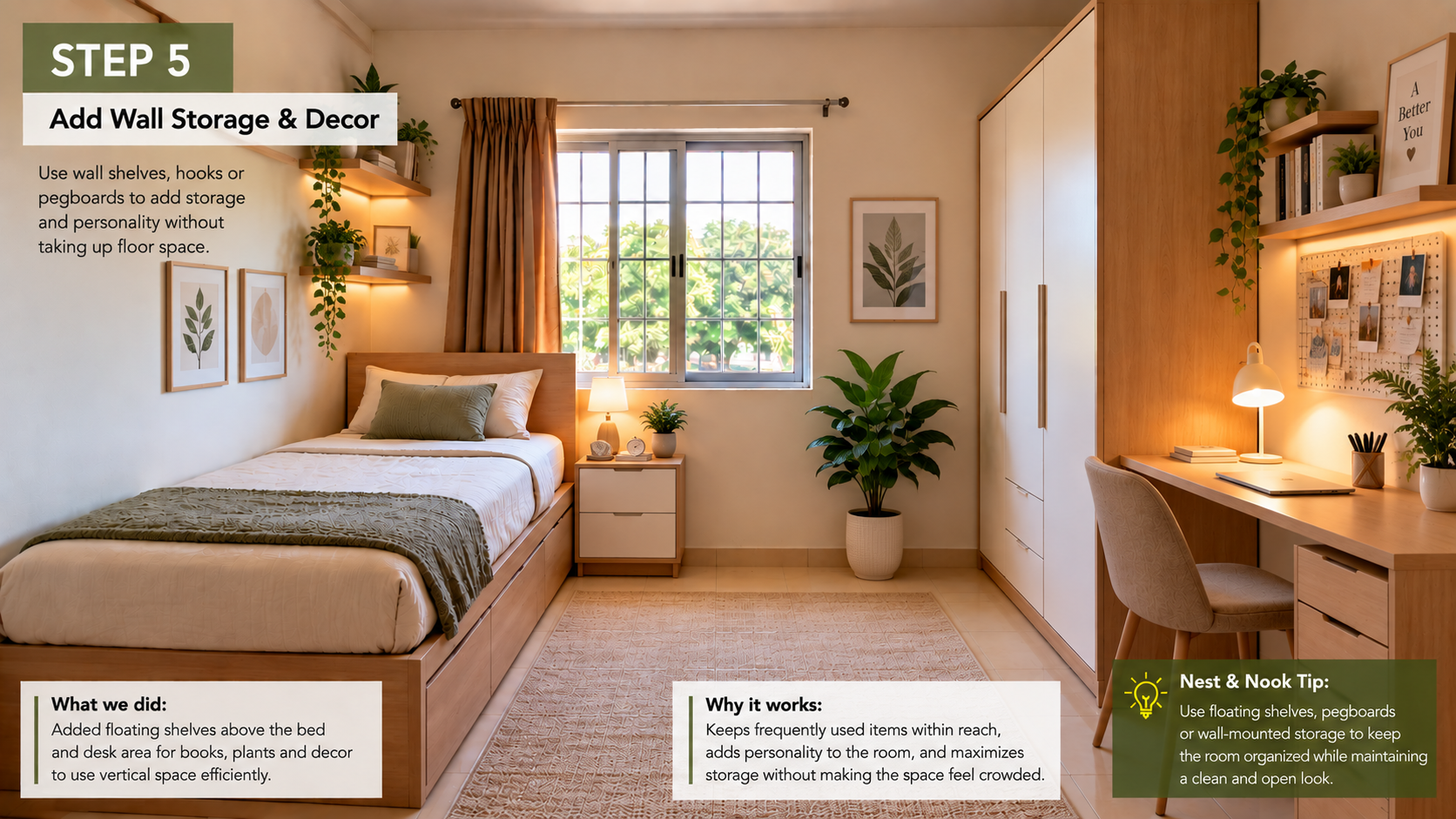
Step 5: Add Wall Storage & Decor
Add shelves and a small amount of decor to use vertical space while keeping the room visually calm.
6. Create a Simple, Cohesive Color Palette
Light colors reflect more light, but a small bedroom does not have to be entirely white. Soft neutrals, muted greens, pale blues, and warm off-whites can all create an airy backdrop. Using similar tones on the walls, bedding, curtains, and larger pieces of furniture reduces sharp visual breaks that can make the room feel divided.
If you prefer darker colors, use them intentionally. A deep accent wall, dark headboard, or rich bedding can add depth without overwhelming the room. Limit the palette to a few coordinated shades, then add interest with texture rather than numerous competing colors and patterns.
7. Improve Natural and Artificial Lighting
Good lighting brightens dark corners and helps a small bedroom feel more welcoming. Avoid blocking windows with tall furniture, and choose curtains that can be pulled fully away from the glass. Hanging the curtain rod slightly above the window and extending it beyond the frame can make the opening appear larger.
Use more than one artificial light source instead of relying solely on a ceiling fixture. A bedside lamp, wall sconce, or compact floor lamp can distribute light throughout the room. Plug-in sconces are particularly useful because they free up nightstand space without requiring permanent electrical work.
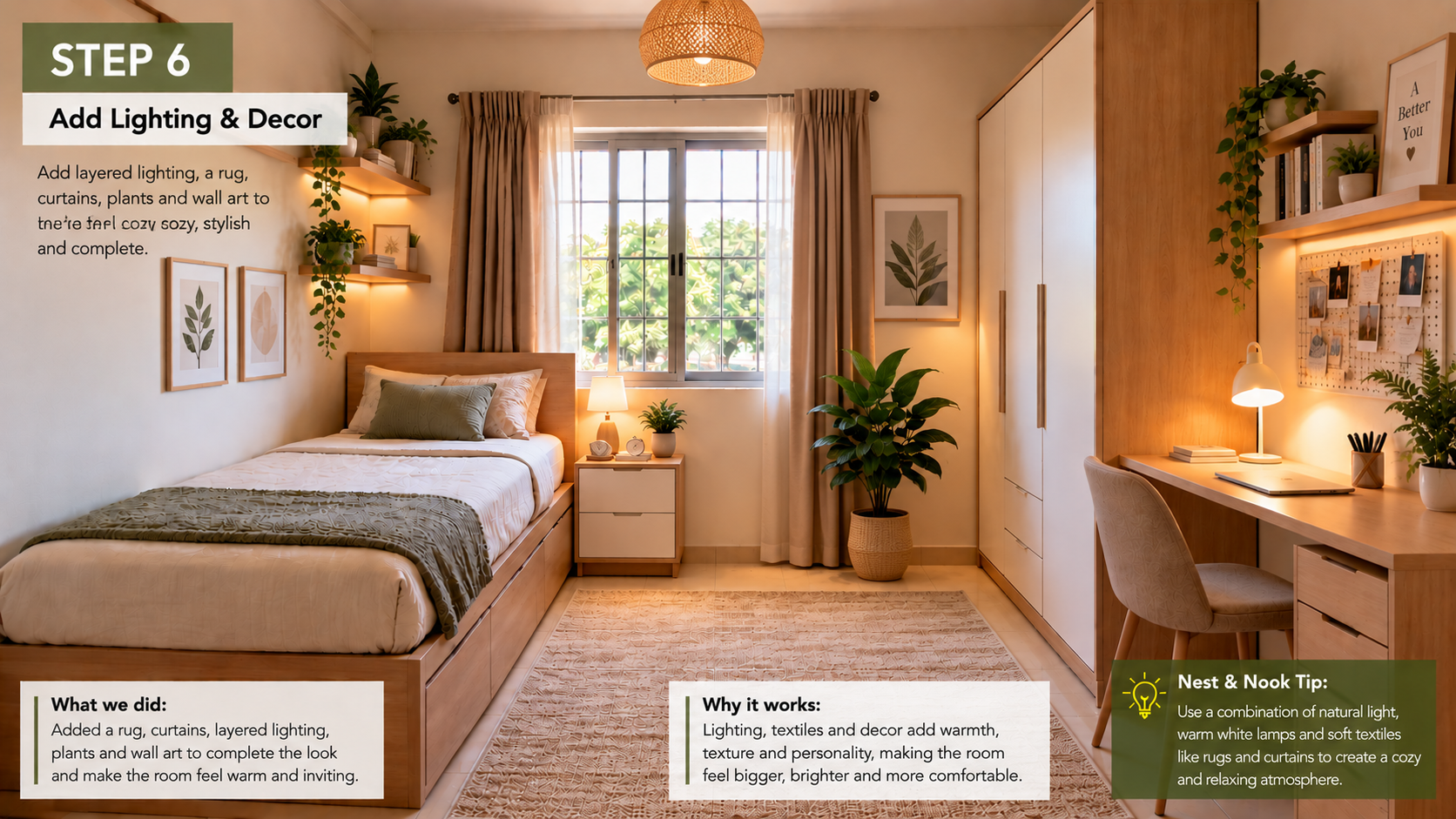
Step 6: Add Lighting & Decor
Finish the functional layout with layered lighting, plants, artwork, and carefully selected decorative details.
8. Place a Mirror Where It Can Reflect Light
A well-positioned mirror can reflect light around the bedroom and extend the sightline, making the space feel less enclosed. Place one across from or near a window when possible. A full-length mirror mounted on a wall, closet door, or bedroom door is functional without taking up floor space.
One appropriately sized mirror usually has more impact than several small decorative mirrors. Check what it reflects before installing it; a mirror facing an overfilled shelf or a pile of laundry may multiply visual clutter rather than create a sense of openness.
9. Reduce Visual Clutter on Open Surfaces
Dressers, nightstands, desks, and shelves can quickly collect small items. Clearing these surfaces is one of the fastest ways to make a small bedroom feel larger. Give everyday essentials a designated place, such as a drawer organizer, lidded box, wall pocket, or small tray.
Try to leave part of each surface empty. On open shelves, group similar objects in baskets or containers rather than displaying everything individually. A few carefully chosen decorative pieces will stand out more than a crowded collection, and the room will be easier to clean.
10. Use Doors and Closets More Efficiently
Doors offer useful storage without taking up additional floor space. Over-the-door organizers can hold shoes, accessories, toiletries, or folded items, while hooks provide a convenient place for robes and bags. Choose slim organizers and confirm that the door can still open and close easily.
Inside the closet, add a second hanging rod if most of your clothing is short. Shelf dividers, stackable bins, and matching hangers can help you use the available width and height more efficiently. Remove empty boxes, unwanted clothing, and items that belong elsewhere before purchasing organizers. Storage products cannot compensate for keeping more than the space can reasonably accommodate.
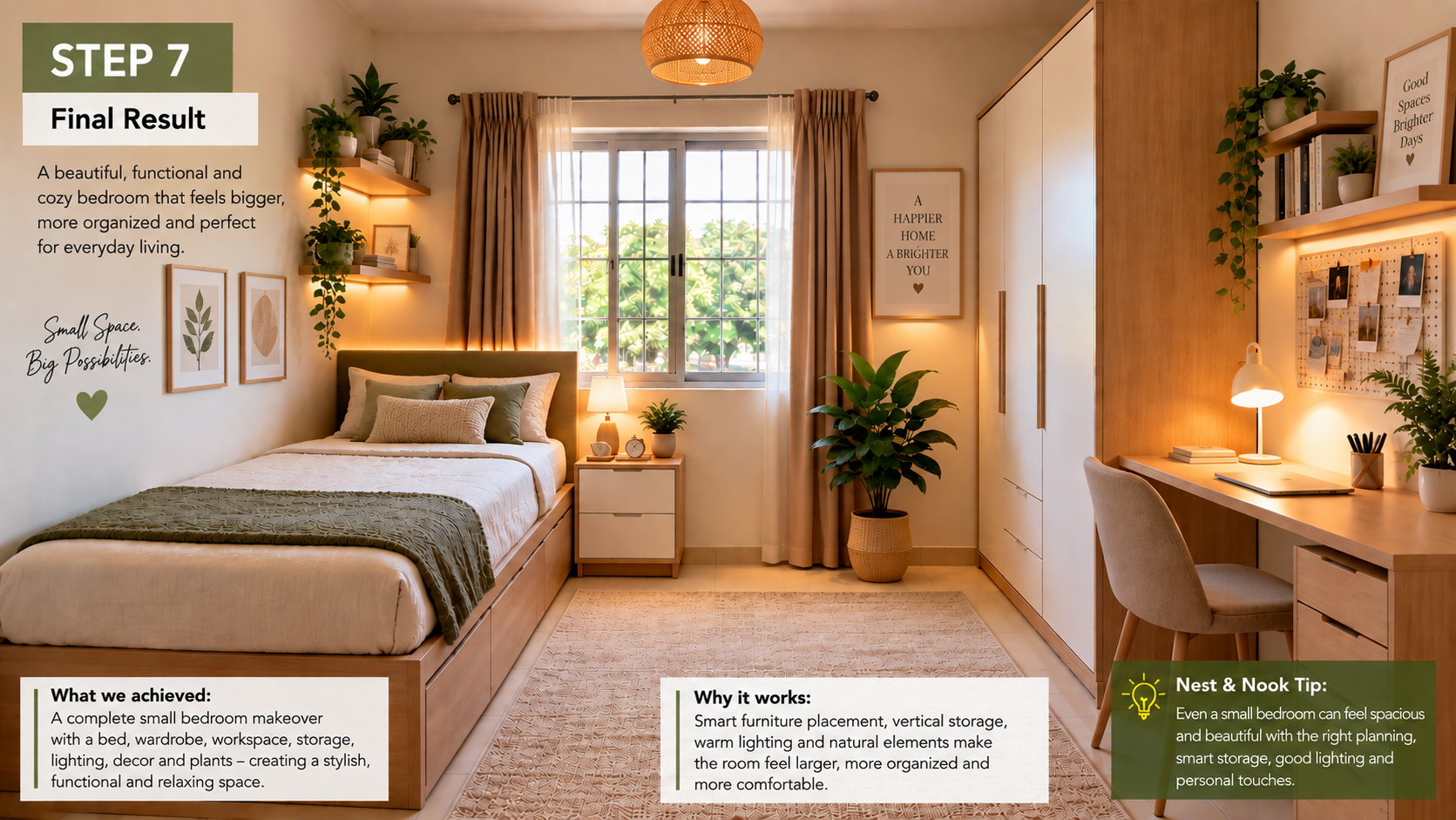
Step 7: Final Result
The finished room combines clear walking space, practical storage, a compact workspace, and balanced lighting and decor.
Make Changes in the Right Order
You do not need to complete a full bedroom makeover all at once. Begin by removing clutter and testing the furniture layout, since both steps cost little or nothing. Next, improve storage for the items that remain. Finish with lighting, color, mirrors, and decor once the room functions well.
The most effective small-bedroom ideas are not about hiding everything or making the space look empty. They are about creating clear paths, useful storage, balanced proportions, and a calm visual rhythm. With thoughtful choices, even a compact bedroom can feel organized, comfortable, and pleasantly open.