Build a More Productive Home Food System
Growing more food at home does not always require a large garden, expensive equipment, or hours of daily work. The key is to use your available space efficiently, choose crops suited to your conditions, and plan for storage before harvest season arrives.
The following strategies can help homeowners, renters, and small-space gardeners produce more food while reducing spoilage. Start with a few methods that fit your household, then expand as you gain experience.
Practical Ways to Grow More Food
1. Create a Simple Growing Plan
Before buying seeds, list the foods your household eats regularly and identify which ones grow well in your climate. Focus on crops that offer useful yields for the space they require. Leaf lettuce, tomatoes, pole beans, herbs, summer squash, and cucumbers are productive choices in many gardens.
Sketch your beds or containers and note planting dates, expected harvest periods, and storage plans. A basic plan helps prevent overcrowding and reduces the chance of growing more perishable produce than you can use.
2. Improve Your Soil With Organic Matter
Healthy soil supports stronger plants and better harvests. Add finished compost, aged manure from a reliable source, or decomposed leaf mold to garden beds. Organic matter can improve soil structure, water retention, and drainage.
A soil test is a worthwhile investment before adding lime, fertilizer, or other amendments. It reveals nutrient levels and soil pH so you can make targeted improvements rather than guessing.
3. Grow Up With Vertical Supports
Trellises, cages, arches, and sturdy fencing allow climbing plants to use vertical space. Pole beans, peas, cucumbers, indeterminate tomatoes, and some compact melons can be trained upward.
Vertical growing frees ground space for other crops and can improve airflow around foliage. Make sure supports are securely anchored and strong enough to hold mature plants during rain and wind.
4. Use Containers in Underused Spaces
Patios, balconies, steps, driveways, and sunny entryways can become productive growing areas. Use containers with drainage holes and fill them with potting mix rather than dense garden soil.
Match container size to the crop. Herbs and lettuce can grow in smaller pots, while tomatoes, peppers, potatoes, and squash need more root space. Containers dry quickly, so check moisture often during hot weather.
5. Plant in Succession
Succession planting keeps beds productive instead of relying on one large harvest. Sow small amounts of radishes, lettuce, carrots, bush beans, and other quick crops every few weeks when weather conditions allow.
You can also replace finished spring crops with warm-season vegetables, then plant cold-tolerant greens in late summer. Check local frost dates and seed packet information to determine whether each crop has enough time to mature.
6. Choose High-Yield and Storage-Friendly Varieties
Varieties differ in yield, growth habit, disease resistance, and storage quality. Look for descriptions such as productive, compact, cold-tolerant, or suitable for storage. Select disease-resistant varieties when common local plant diseases are known.
For long-term storage, consider winter squash, dry beans, storage onions, garlic, potatoes, carrots, beets, and certain cabbage varieties. These crops generally keep longer than tender vegetables when handled correctly.
7. Interplant Compatible Crops
Interplanting places crops with different growth patterns in the same area. Fast-growing radishes can mature between young cabbage plants, while lettuce may grow beneath trellised beans before the vines create dense shade.
Avoid packing plants so closely that they compete heavily for water or develop poor airflow. Follow minimum spacing guidance and account for the mature size of each plant.
8. Extend the Growing Season
Row covers, cold frames, low tunnels, and cloches can protect crops from light frost and cool winds. These tools are especially useful for spinach, kale, lettuce, carrots, and other cold-tolerant vegetables.
Monitor temperatures under covered structures because they can heat up quickly on sunny days. Vent cold frames and tunnels as needed, and secure lightweight covers so they do not damage plants or blow away.
9. Reduce Water Loss
Water plants deeply enough to moisten the root zone rather than applying frequent shallow sprinkles. Drip irrigation and soaker hoses deliver water close to the soil and keep much of the foliage dry.
A layer of clean straw, shredded leaves, or another suitable mulch slows evaporation and suppresses weeds. Keep mulch slightly away from plant stems to discourage rot and pests.
Practical Ways to Store More Food
10. Harvest at the Right Time
Storage quality begins in the garden. Harvest produce when it is mature and in good condition, using clean tools to prevent cuts and bruises. Damaged items should be eaten or processed promptly rather than placed in long-term storage.
Whenever possible, harvest during the cool part of the day and move produce out of direct sunlight. Learn the needs of each crop; for example, tomatoes are often best stored at room temperature, while leafy greens need prompt cooling.
11. Organize Refrigerator Storage
A crowded, disorganized refrigerator makes it easy to lose food behind jars and containers. Use clear bins to group foods, label leftovers with dates, and place items that need to be used soon where they are visible.
Store produce according to its humidity needs. Keep fruits that release ethylene, such as apples, away from vegetables that are sensitive to it when practical. Regularly remove spoiled items so decay does not spread.
12. Freeze Food in Useful Portions
Freezing is one of the most accessible ways to preserve garden produce and prepared meals. Blanch most vegetables before freezing to help maintain quality, following reliable instructions for the correct blanching time.
Cool food before packing, remove excess air, and use moisture-resistant freezer containers or bags. Label each package with the food and date. Freeze items in portions your household can use at one time to avoid waste.
13. Learn Safe Home Canning
Home canning can preserve tomatoes, fruits, pickles, jams, vegetables, meats, and other foods, but the correct method is essential. Use current, laboratory-tested recipes from trusted sources such as the National Center for Home Food Preservation or university extension services.
Acid foods may be suitable for boiling-water canning, while low-acid foods require pressure canning. Do not change ingredient proportions, processing times, jar sizes, or pressure recommendations unless the tested recipe specifically permits it.
14. Dehydrate Herbs and Produce
Dehydration creates compact foods that require little storage space. Herbs, sliced fruits, vegetables, and some prepared foods can be dried with a food dehydrator or another method recommended by a reliable preservation guide.
Dry food thoroughly, allow it to cool, and pack it in clean, airtight containers. Store containers in a cool, dark, dry location and check them for condensation. If moisture appears, the food may need additional drying.
15. Create a Cool, Dark Storage Area
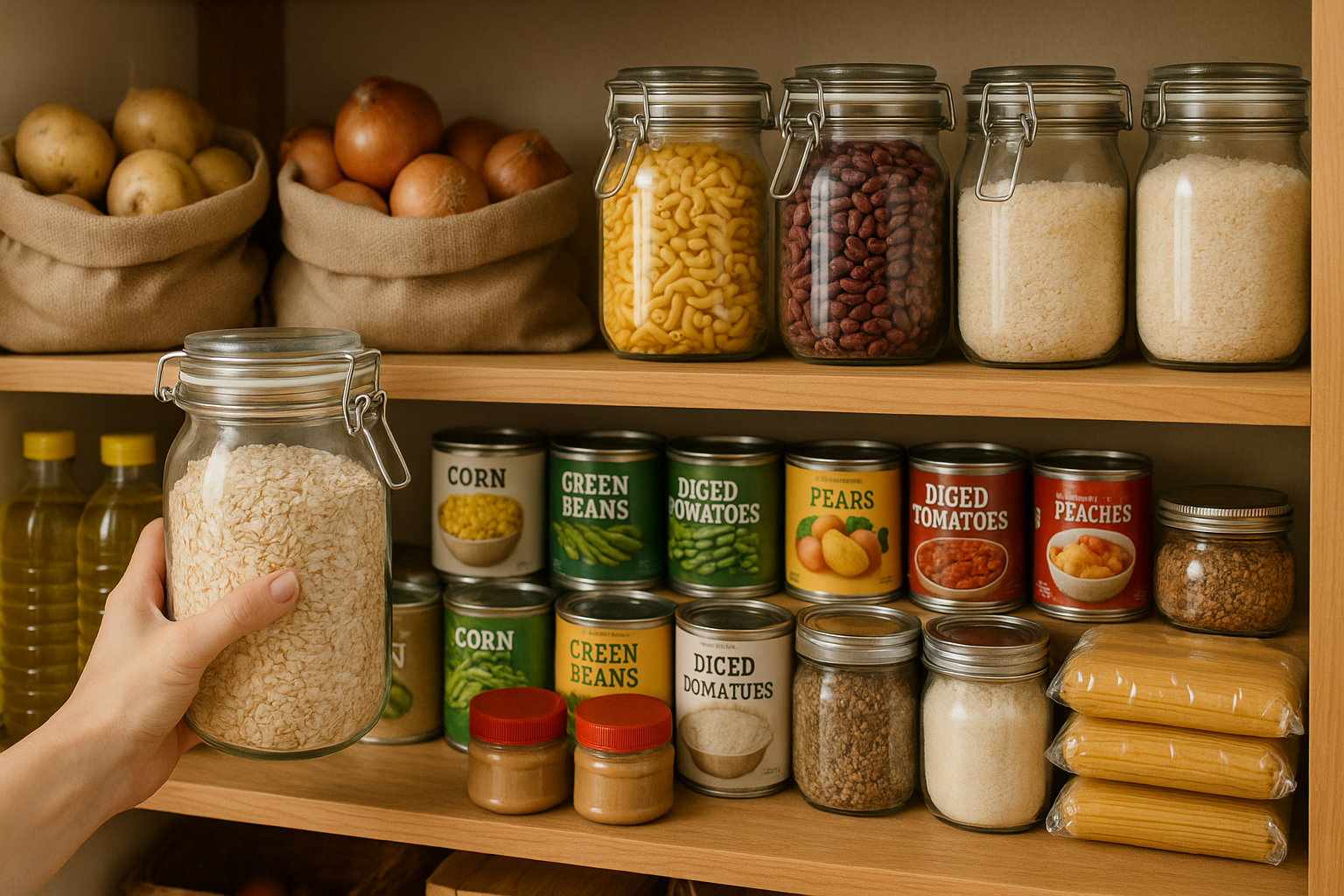
Not every home has a traditional root cellar, but a cool basement corner, insulated cabinet, garage storage area, or spare refrigerator may serve a similar purpose. Temperature and humidity requirements vary by crop, so do not store everything together automatically.
Cure onions, garlic, potatoes, and winter squash as recommended before storage. Use ventilated crates, baskets, shelves, or mesh bags, and protect produce from light, freezing, rodents, and excess moisture. Inspect stored food regularly and remove anything soft, moldy, leaking, or badly damaged.
Start Small and Keep Records
A dependable home food supply develops through steady improvements. Track what you plant, how much you harvest, which preservation methods you use, and what your household actually eats. These notes can guide next season's seed purchases and help you avoid producing more than you can safely store.
Begin with one additional garden bed, a few containers, or a single preservation skill. By combining efficient growing practices with careful storage, you can make better use of your space, extend the value of each harvest, and waste less food throughout the year.