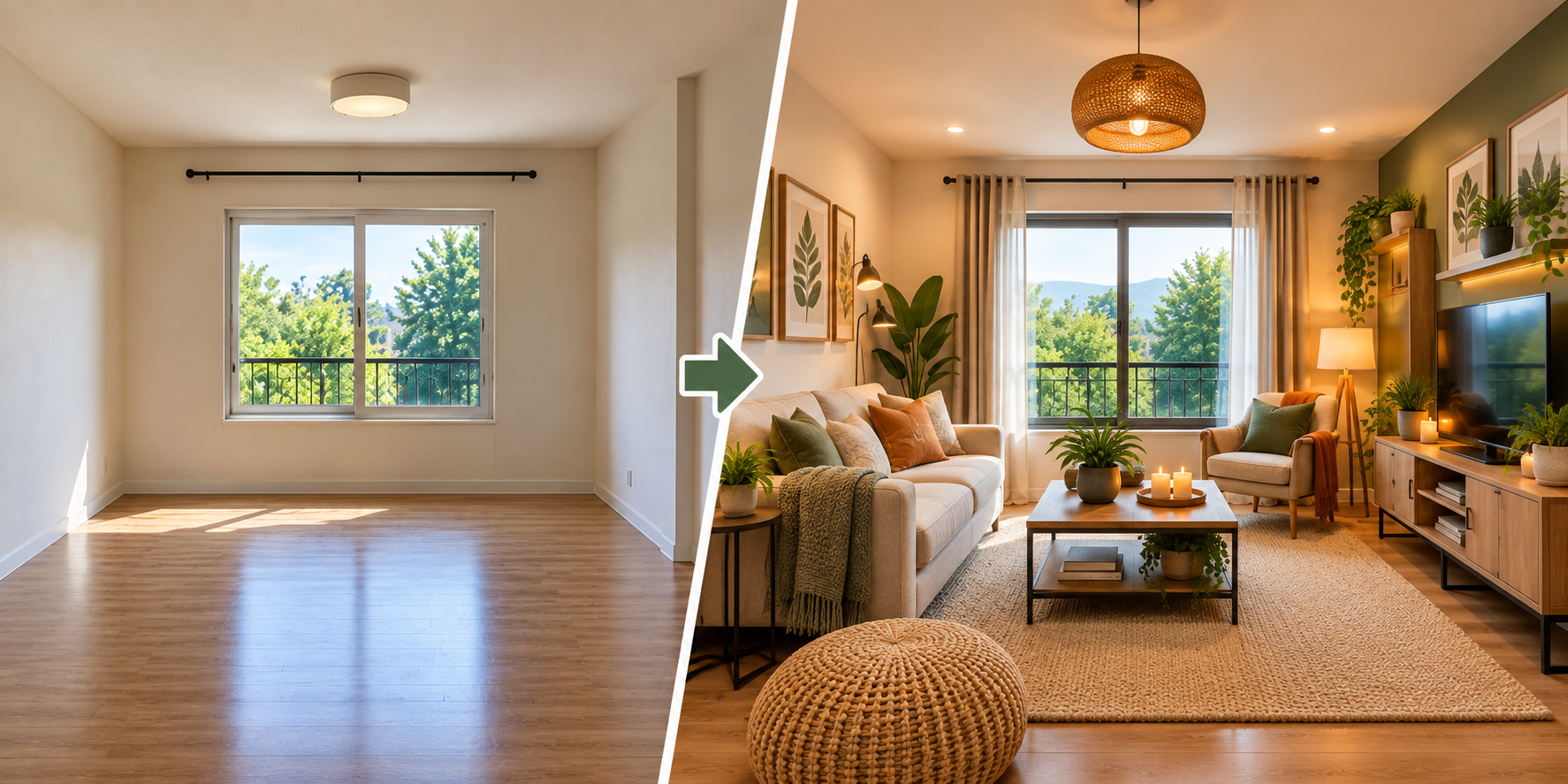
A small living room can feel comfortable, functional, and stylish without feeling crowded. The key is to build the room in layers—starting with the main seating, then adding a rug, coffee table, storage, lighting, plants, and a few carefully chosen decorative pieces.
This makeover shows how a simple living room can be transformed step by step while keeping the layout practical and the overall look calm and welcoming.
Before: The Starting Point
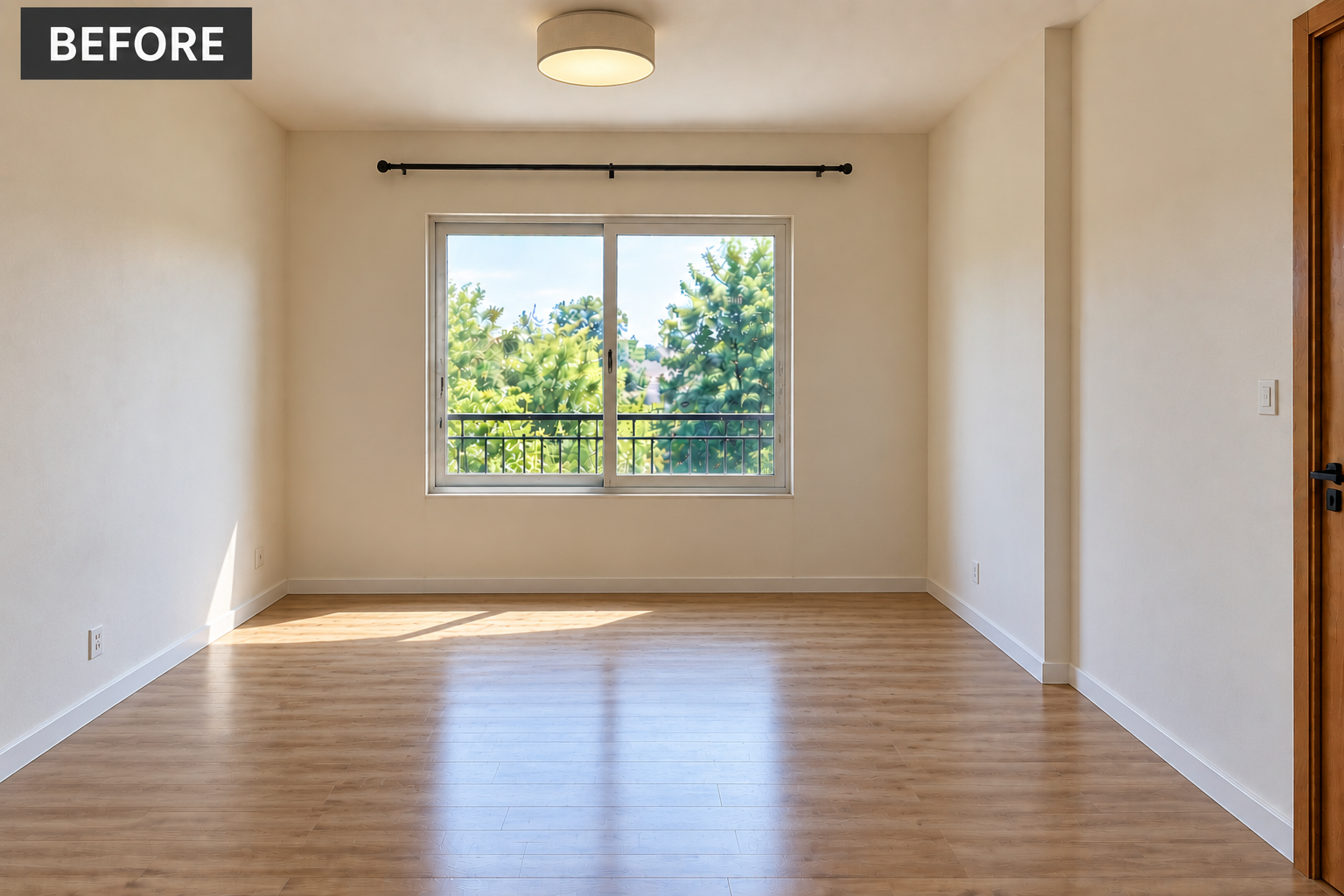
Before adding furniture, consider the available space. Keeping the main walkways open makes it easier to choose furniture that fits rather than filling the room with pieces that make it feel smaller.
Step 1: Add a Sofa and Additional Seating
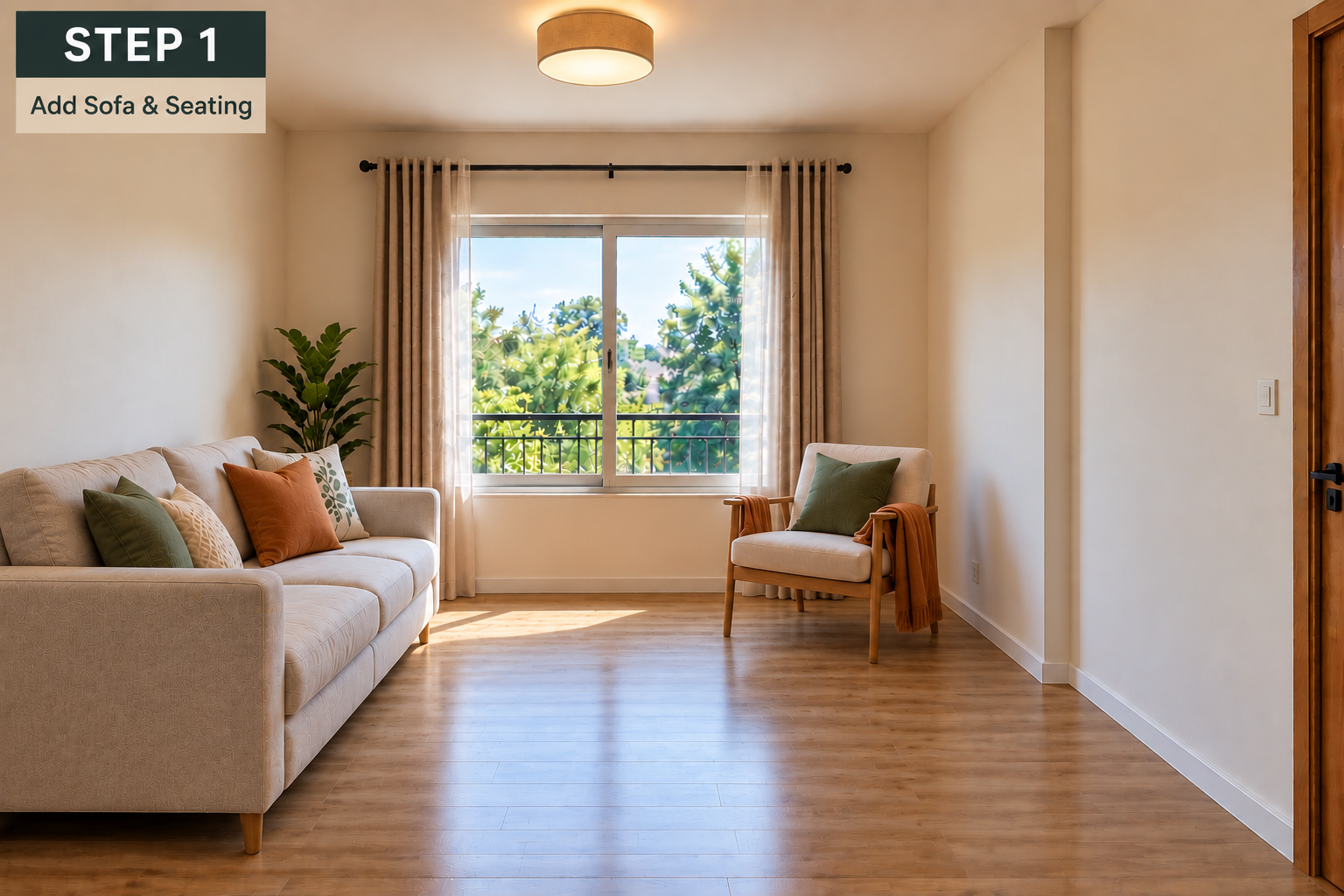
Start with the largest furniture pieces. A sofa creates the main anchor for the room, while a compact armchair can provide additional seating without taking up too much floor space.
For a small room, choose furniture with proportions that leave comfortable walking space around each piece. Neutral upholstery also makes it easier to change accent colors later.
Step 2: Add the Rug and Coffee Table
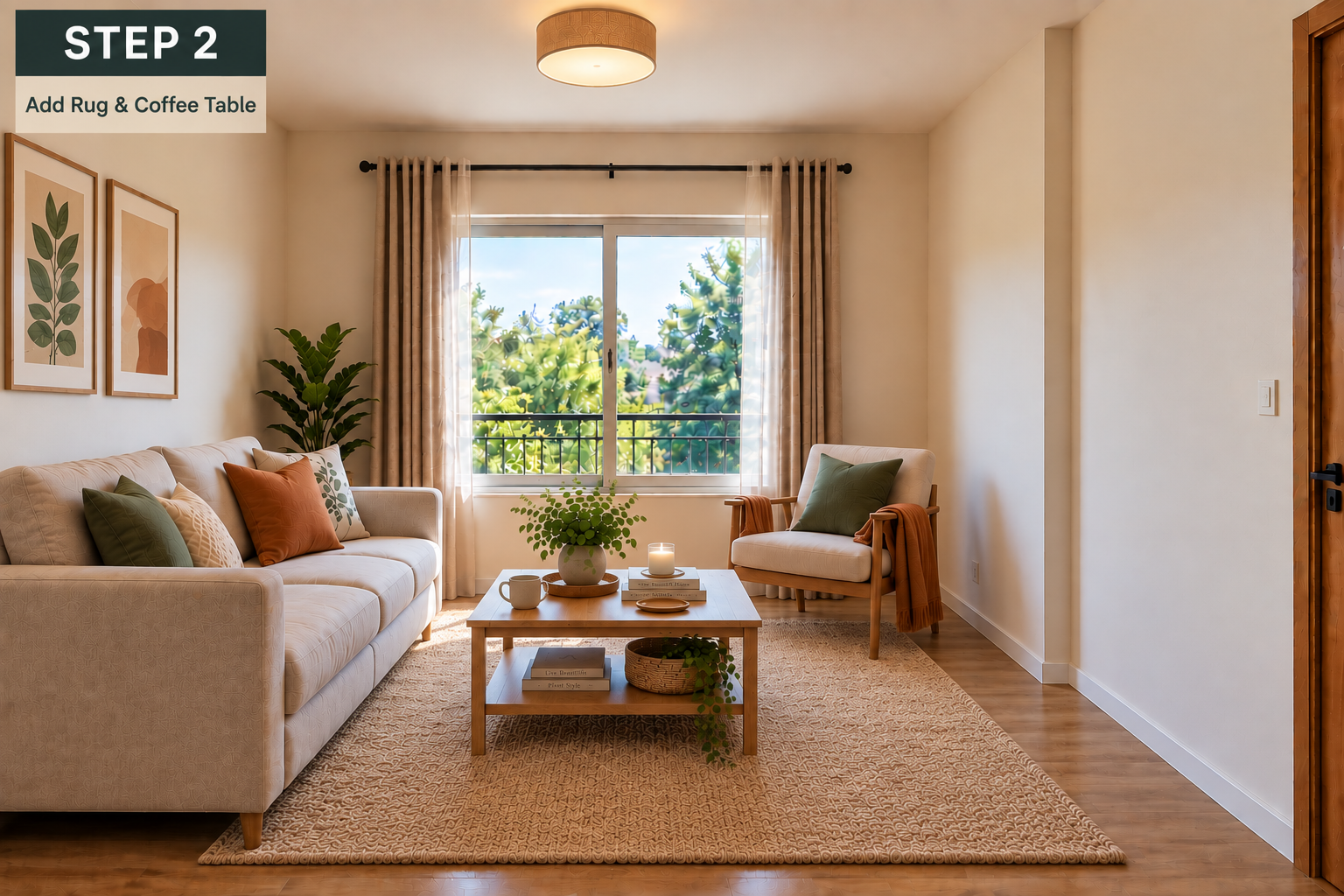
Once the seating is in place, add a rug to define the conversation area. A coffee table gives the room a useful central surface for everyday items, books, plants, or simple decor.
In a compact room, avoid choosing a coffee table that is too large. Leave enough space to move comfortably between the seating and the table.
Step 3: Add a TV Console and Storage
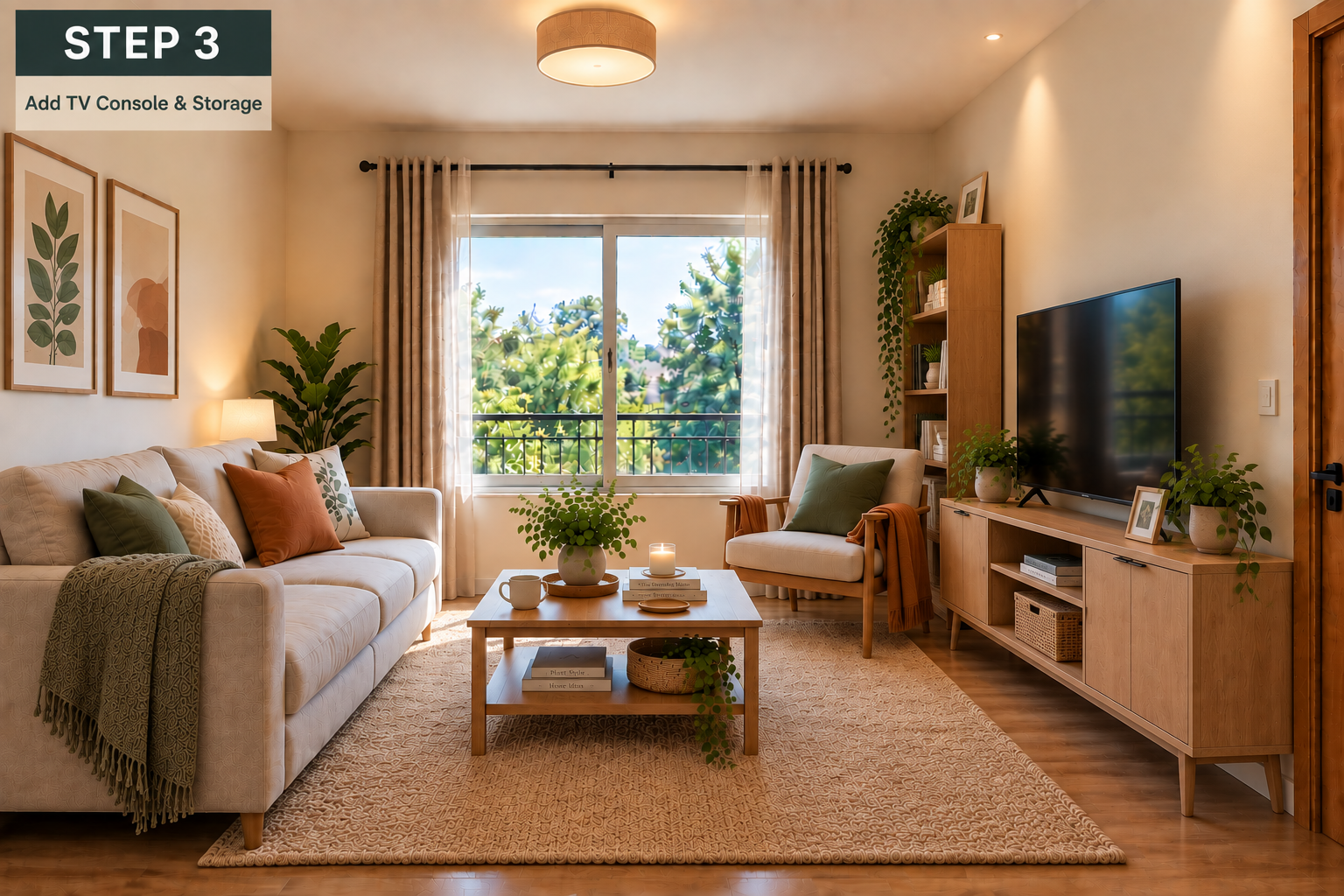
Next, introduce storage. A TV console can provide a home for electronics, while shelves can display books, plants, and a small selection of decorative objects.
The key is to take advantage of vertical storage while keeping the floor visually open. Too many separate cabinets can make a small living room feel crowded and heavy.
Step 4: Add Lighting and Plants
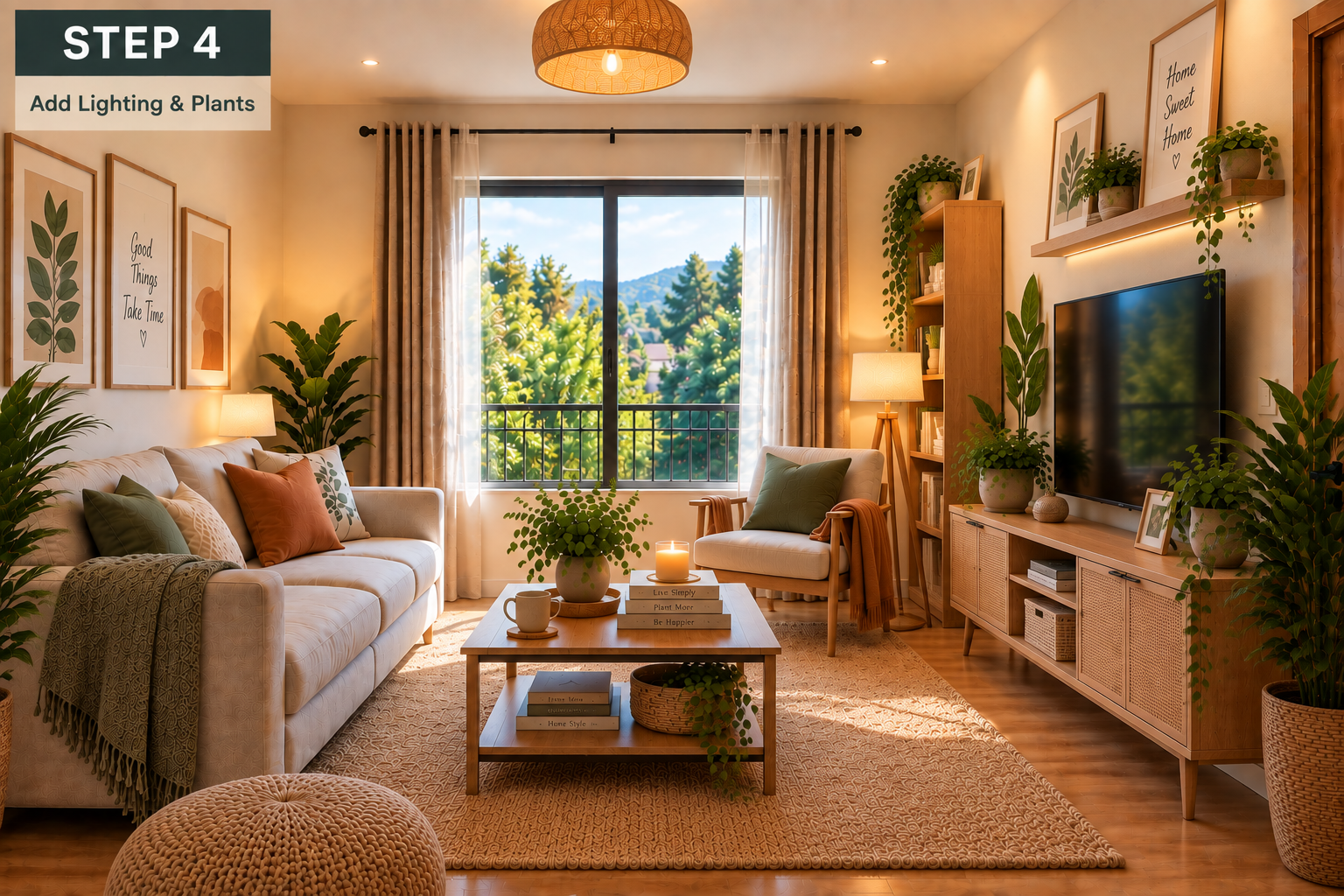
Good lighting can dramatically change how a living room feels. Combine natural daylight with a floor lamp, table lamp, pendant light, or other warm light sources where practical.
Plants add another layer of texture and bring natural color to a neutral room. Use a mix of plant heights rather than placing every plant at the same level.
Step 5: Add Final Touches and Decor
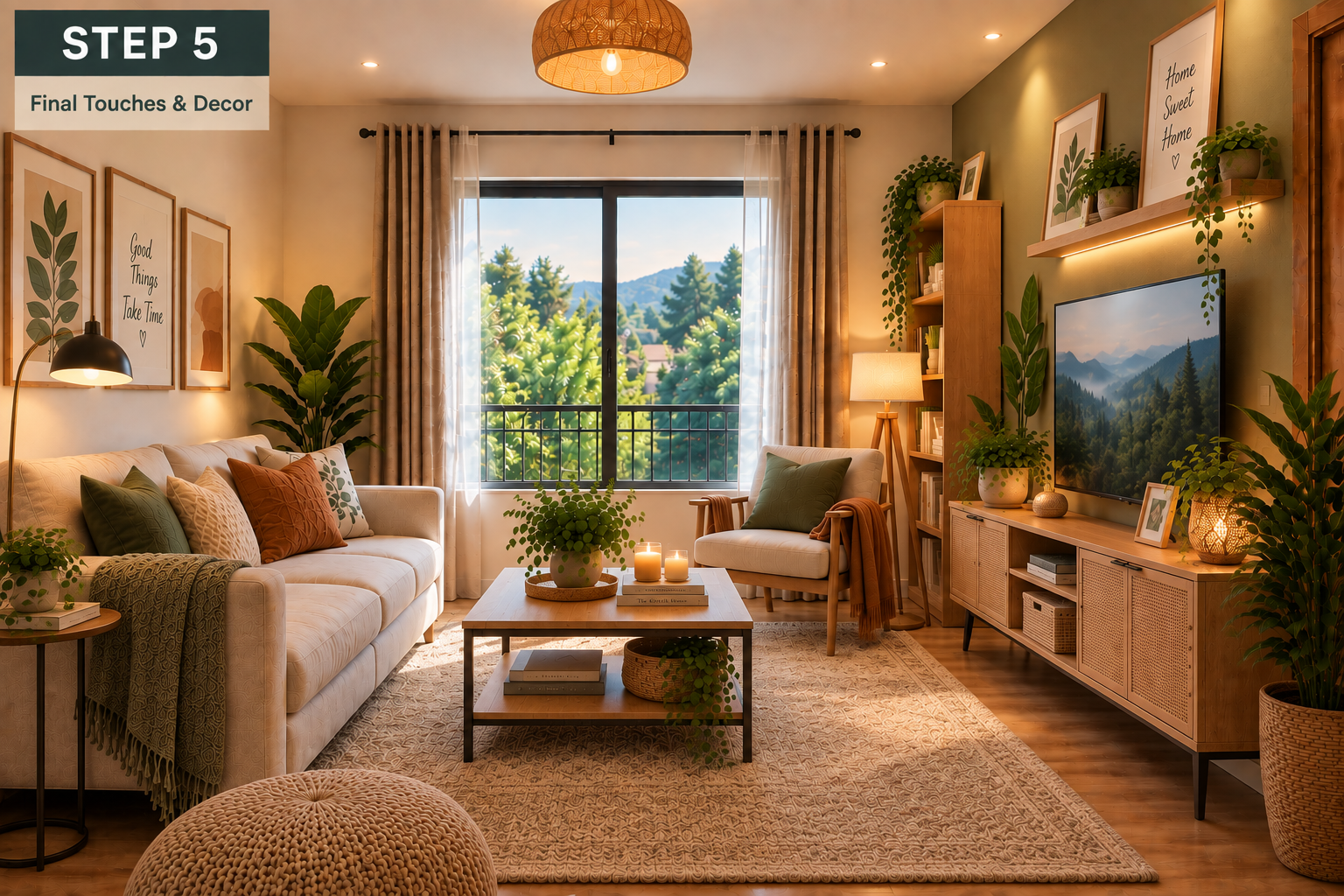
The final layer should be selective rather than excessive. Add artwork, cushions, throws, books, baskets, candles, and a few personal objects that complement the room's color palette.
Repeating a few materials or colors throughout the room helps the different pieces feel connected. Natural wood, woven textures, greenery, and warm neutral colors can create a relaxed look without making the room feel busy.
Final Result
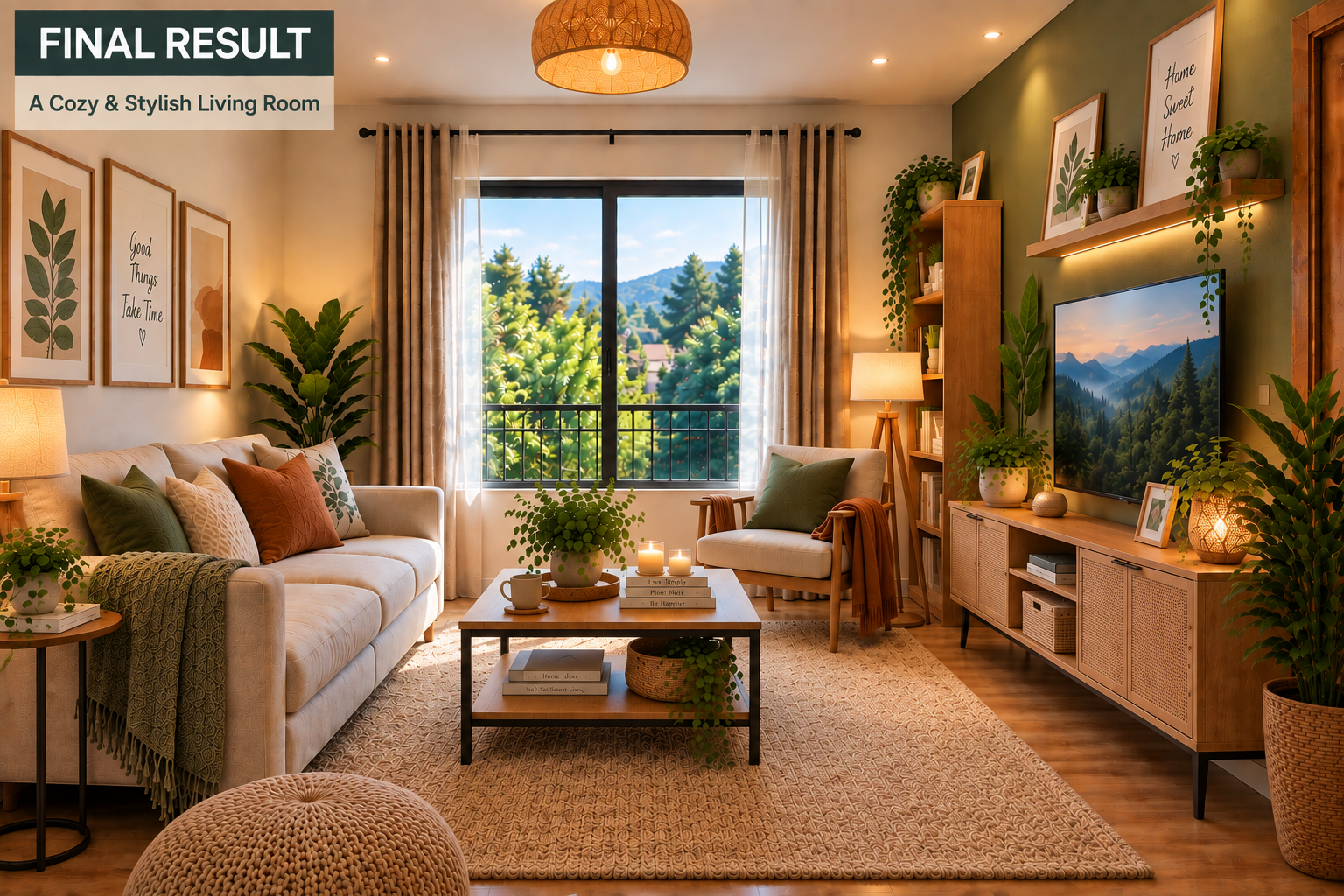
The transformation works because the room was built in layers. The main furniture establishes the layout, the rug and coffee table connect the seating area, storage adds functionality, and lighting and decor create the final atmosphere.
Practical Tips for Your Own Living Room
- Measure the room before buying large furniture.
- Keep the main walkways clear.
- Choose furniture that matches the scale of the room.
- Use rugs to visually define seating areas.
- Use vertical storage when floor space is limited.
- Layer several light sources instead of relying on a single ceiling light.
- Use plants and natural textures to add warmth.
- Repeat a small number of colors and materials for a cohesive look.
- Leave some surfaces empty so the room does not feel visually cluttered.
- Add decorative items gradually, and remove anything that feels unnecessary.
How to Adapt This Makeover
You do not need to copy this room exactly. The same design process can work with different furniture sizes, colors, budgets, and room layouts.
Start with the largest pieces, establish comfortable pathways, then add functional elements before decorating. This approach makes it easier to create a living room that looks good while still working for everyday life.