Growing Vegetables in Containers
Container gardening makes it possible to raise fresh food in spaces where traditional garden beds are not practical. Pots can fit on patios, balconies, porches, driveways, and sunny windowsills. They are also easier to protect from some pests, poor soil, and changing weather.
The key is matching each vegetable with a large enough container. Small pots dry out quickly and restrict roots, so choosing a slightly larger container usually produces healthier plants. Every pot should have drainage holes, and most fruiting vegetables need at least six to eight hours of direct sunlight per day.
Container Gardening Basics
Fill containers with a high-quality potting mix rather than garden soil. Potting mix is lighter, drains better, and is less likely to become compacted. Because nutrients wash out with repeated watering, container vegetables also benefit from regular feeding with a balanced fertilizer used according to its label.
- Check moisture frequently: Water when the top inch of potting mix feels dry. During hot weather, some containers may need daily watering.
- Water deeply: Apply water until it begins to drain from the bottom of the pot.
- Allow enough space: Avoid crowding too many plants into one container.
- Add support early: Install stakes, cages, or trellises before climbing plants become difficult to manage.
- Choose compact varieties: Look for labels such as patio, bush, dwarf, baby, or container-friendly.
10 Vegetables That Grow Well in Containers
1. Tomatoes
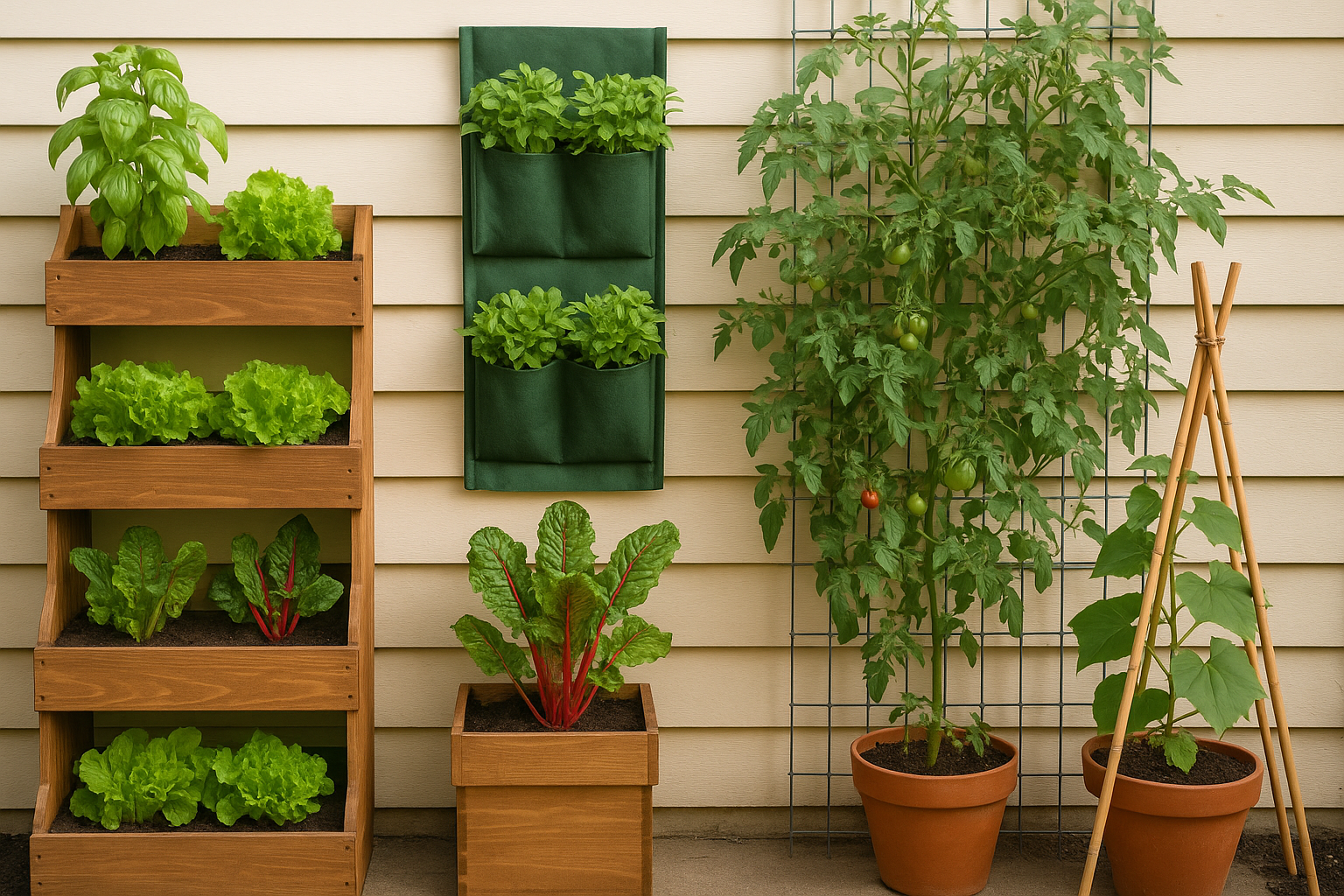
Tomatoes are among the most popular container crops. Compact determinate, patio, and dwarf varieties are easier to manage than sprawling indeterminate types. Use a five-gallon container at minimum for one small tomato plant; larger pots of 10 gallons or more provide better moisture control and root space.
Place the container in full sun and add a sturdy cage or stake when planting. Keep the soil consistently moist because repeated swings between very dry and very wet conditions can contribute to fruit problems. Cherry tomatoes are particularly productive and convenient for small gardens.
2. Peppers
Both sweet and hot peppers adapt well to pots. One plant can grow in a container holding at least three to five gallons, although a larger pot will dry out less quickly. Peppers prefer warm weather, full sun, and well-drained potting mix.
Compact plants may not need support, but heavily loaded branches can benefit from a short stake. Harvest sweet peppers while green or allow them to mature to their final color. Hot peppers generally become hotter and more flavorful as they ripen.
3. Lettuce
Lettuce has shallow roots, making it suitable for window boxes, bowls, and other wide containers that are at least six inches deep. Leaf lettuce is especially useful because you can harvest the outer leaves while allowing the center to continue growing.
Sow seeds every two to three weeks for an extended harvest. Lettuce grows best in cool weather and may appreciate afternoon shade as temperatures rise. Keep the potting mix evenly moist to reduce bitterness and premature bolting.
4. Radishes
Fast-growing radishes are an excellent choice for beginners. Most round varieties need a container only six to eight inches deep, while long-rooted types require more depth. Space seeds according to the seed packet so each root has room to expand.
Radishes prefer cool conditions and consistent moisture. Many varieties are ready within a month, allowing the container to be replanted several times in spring and fall. Harvest promptly because roots can become tough or pithy if left too long.
5. Carrots
Carrots grow successfully in containers when the pot is deep enough for the selected variety. Short types, including Parisian, Chantenay, and baby carrots, are often easier than long storage carrots. Choose a container at least 10 to 12 inches deep and fill it with loose potting mix.
Sow seeds directly because carrots do not transplant well. Once seedlings appear, thin them to the recommended spacing. Crowded carrots may produce small or misshapen roots. Maintain steady moisture during germination, which can take one to three weeks.
6. Bush Beans
Bush beans produce a useful harvest without requiring a tall trellis. Plant them in a container at least 12 inches deep and wide enough to space several plants a few inches apart. Beans need full sun, good airflow, and regular watering when flowers and pods are developing.
Pick pods every few days once production begins. Frequent harvesting encourages the plants to keep producing. If vertical space is available, pole beans are another option, but they require a secure trellis and a heavier pot that will not tip over.
7. Cucumbers
Compact bush cucumbers and short-vined varieties are best for containers. Use a pot holding at least five gallons for one plant, and provide a trellis to lift vines and fruit off the ground. Vertical growth improves airflow while conserving floor space.
Cucumbers need warmth, full sun, and dependable moisture. Their large leaves lose water quickly, so check the container often during summer. Harvest cucumbers while they are firm and at the recommended size for the variety; oversized fruit can become seedy and bitter.
8. Green Onions
Green onions require little space and grow in relatively shallow containers. A pot six inches deep is sufficient for most varieties. Sow seeds closely and harvest the slender plants as needed, or plant onion sets for a faster crop.
Place the container in full sun or light partial shade and keep the soil moist but not waterlogged. For a continuing supply, sow small batches every few weeks. Green onions also fit well around the edges of larger mixed containers.
9. Kale
Kale is a dependable cool-season vegetable that tolerates container life well. Grow one full-size plant in a two- to five-gallon pot, or plant several baby-leaf plants in a wider container. Select compact varieties if space is limited.
Harvest lower leaves individually once they reach a useful size, leaving the center to produce new growth. Kale prefers rich potting mix and consistent moisture. In many climates, it continues growing through light frosts, and cool temperatures can improve the flavor.
10. Zucchini
Zucchini needs more room than many container vegetables, but compact bush varieties can still perform well. Use a sturdy container of at least 10 gallons for one plant. Position it in full sun with enough space around the broad leaves for air circulation.
Zucchini plants need frequent watering and regular feeding to support their rapid growth. Check beneath the leaves often and harvest fruit while young and tender. If flowers appear but fruit does not develop, limited pollinator activity may be the cause; flowers can be hand-pollinated with a small brush.
Making the Most of a Container Vegetable Garden
Group pots with similar sunlight and watering needs to simplify maintenance. Adding a thin layer of clean straw or another lightweight mulch can slow moisture loss, but keep mulch away from plant stems. Elevating pots slightly may also help drainage and prevent stains on patios.
Inspect leaves regularly for discoloration, holes, and pests. Early action is easier than dealing with a severe problem. Remove damaged foliage, wash off small pests with water, and use only pest-control products labeled for edible plants when additional treatment is necessary.
At the end of the season, remove old roots and plant debris. Wash reusable containers before storing or replanting them. Potting mix can sometimes be refreshed with compost and new mix, but soil from diseased plants is best discarded rather than reused for vegetables.
Start Small and Build on Success
A productive container garden can begin with just one sunny spot and a few suitable pots. Lettuce, radishes, and green onions offer quick results, while tomatoes, peppers, cucumbers, and zucchini provide satisfying summer harvests. By choosing appropriately sized containers and monitoring water regularly, you can grow a useful selection of vegetables without an in-ground garden.