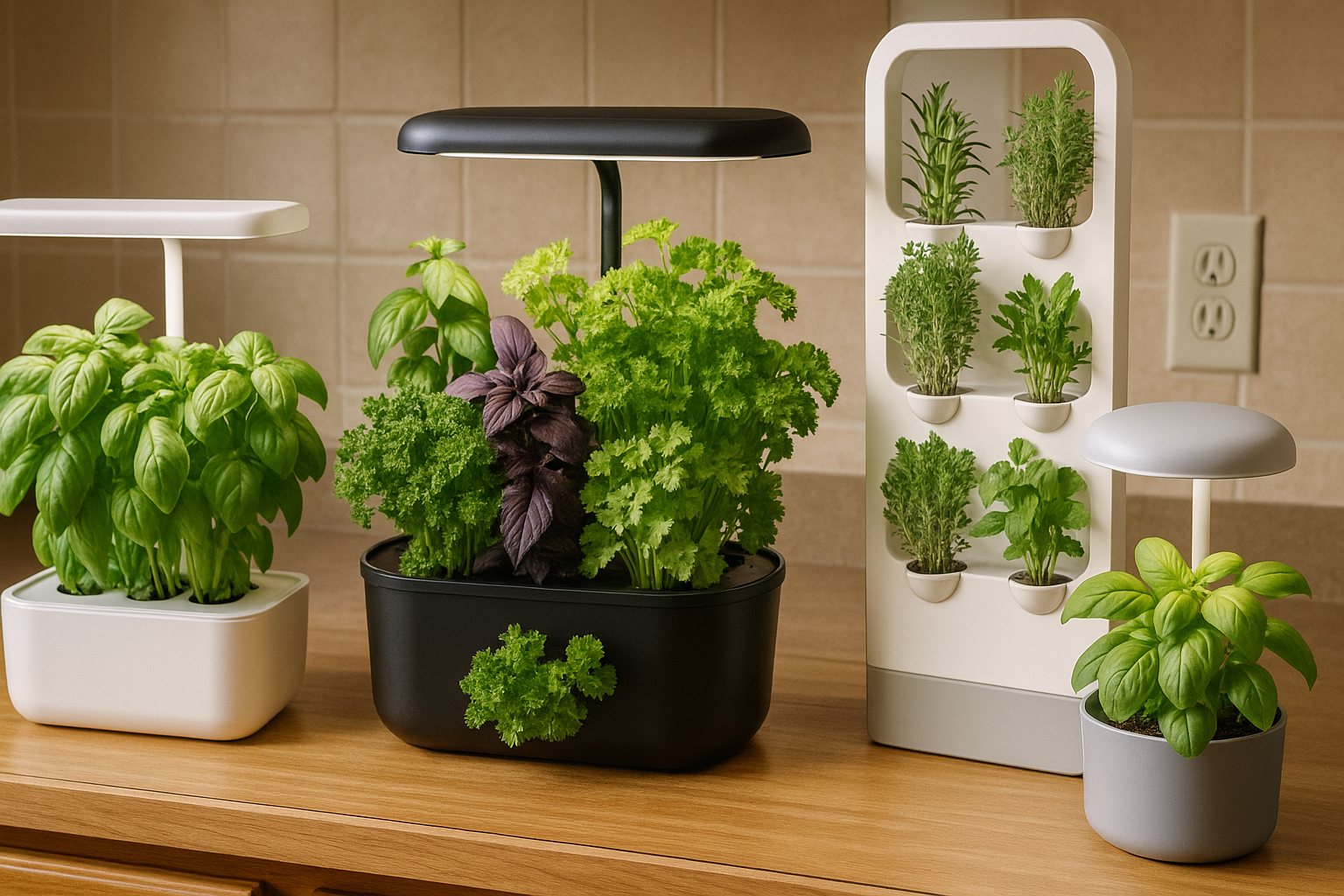
An indoor hydroponic garden lets you grow herbs without soil, making it a practical option for kitchens, apartments, and homes with limited outdoor space. Plant roots receive water, nutrients, and oxygen directly, while an indoor grow light can provide consistent illumination regardless of the season.
There is no single best hydroponic system for every household. The right design depends on your available space, the herbs you want to grow, your maintenance routine, and your comfort with monitoring water conditions. The following five system types are especially well suited to growing herbs at home in 2026.
1. Wick Systems for Simple, Low-Maintenance Growing
A wick system is one of the easiest ways to begin growing herbs hydroponically. A fabric wick draws nutrient solution from a reservoir into the growing medium, delivering moisture to the roots without a pump. Because the system has no complex plumbing or moving water, it is generally quiet and easy to maintain.
Wick gardens work best for smaller herbs that do not consume water rapidly. Thyme, oregano, parsley, and young basil plants may perform well when the wick and growing medium remain evenly moist.
Advantages
- No water pump is required.
- The system uses little electricity beyond what is needed for the grow light.
- There are few mechanical parts to clean or troubleshoot.
- It is suitable for a small countertop or shelf.
Limitations
A wick may not deliver water quickly enough for large, mature plants. The growing medium can also become too wet if the system is poorly ventilated. Check the roots periodically and prune herbs often to keep them an appropriate size for the setup.
2. Deep Water Culture for Fast-Growing Leafy Herbs
In a deep water culture system, plant roots hang directly in a reservoir of nutrient solution. An air pump supplies oxygen through an air stone, helping reduce stagnant conditions around the submerged roots. Constant access to water and nutrients can support vigorous growth when light, temperature, and nutrient levels are properly managed.
This method is a good match for basil, mint, cilantro, and other leafy herbs. It is less suitable for large, woody plants or herbs that prefer comparatively dry root conditions.
Advantages
- Roots have continuous access to the nutrient solution.
- The design is relatively straightforward.
- Water loss is limited when the reservoir is covered.
- Plants often respond quickly to proper care.
Limitations
The air pump typically needs to operate continuously. If aeration stops for an extended period, root health may decline. Light entering the reservoir can also encourage algae growth, so opaque containers and covered openings are important. Monitor the water level to ensure that young roots can reach the solution.
3. Nutrient Film Technique for Growing Several Herbs
Nutrient film technique, commonly called NFT, circulates a shallow stream of nutrient solution through a slightly sloped channel. Herb roots sit inside the channel, where they come into contact with both the moving water and oxygen. The solution then returns to a reservoir and is pumped through the system again.
NFT makes efficient use of horizontal space and works well for compact herbs such as basil, cilantro, dill, chives, and parsley. It can be useful for households that want to grow several plants without using a separate container for each one.
Advantages
- Multiple herbs can grow in an organized row.
- The recirculating design helps conserve water.
- Roots receive both nutrients and oxygen.
- Plants are easily accessible for harvesting and inspection.
Limitations
NFT relies on steady water circulation. A blocked line, failed pump, or incorrect channel angle can leave roots without enough moisture. Root growth may also obstruct the channel if plants are allowed to become oversized. This method is better suited to growers who are comfortable checking water flow every day.
4. Ebb-and-Flow Systems for Greater Growing Flexibility
An ebb-and-flow system periodically pumps nutrient solution into a growing tray and then drains it back into a reservoir. This cycle moistens the roots while allowing fresh oxygen to enter the growing medium as the water recedes.
This method accommodates different containers and can support a wider range of herb sizes than some compact channel systems. Rosemary, sage, basil, parsley, and chives can be grown with suitable spacing and carefully timed watering cycles.
Advantages
- It can support herbs with different growth habits.
- Individual plants may be moved or replaced more easily.
- Periodic drainage helps oxygen reach the root zone.
- The system can be adapted to shelves or larger indoor growing areas.
Limitations
Successful operation depends on a timer, a pump, and an unobstructed drain. Flooding too frequently can keep roots overly wet, while long gaps between cycles may allow them to dry out. The appropriate schedule varies depending on plant size, growing medium, indoor temperature, and humidity.
5. Drip Systems for Individual Control
A hydroponic drip system delivers nutrient solution through small tubes positioned near each plant. Runoff may return to a shared reservoir or be collected separately. The flow can be adjusted for individual containers, giving growers more control over herbs with different water requirements.
This design is helpful for mixed herb gardens or larger plants. Basil may need more frequent irrigation than rosemary, for example, and separate drip lines make those differences easier to manage.
Advantages
- Water delivery can be adjusted for each plant.
- The system works with several types of growing media.
- Plants can be spaced according to their mature size.
- The design provides room to expand an established indoor garden.
Limitations
Small emitters can clog when mineral deposits or debris accumulate. Tubing should be inspected regularly, and the nutrient solution should be kept clean. Drip systems also involve more components than wick or deep water culture designs, so setup and maintenance may take longer.
How to Choose an Indoor Hydroponic Garden System
Before choosing a system, measure the intended location and consider the mature size of the herbs you want to grow. A compact setup may fit beneath a cabinet, but basil, dill, and mint can quickly outgrow tight spaces.
Compare systems using these practical factors:
- Available height: Include room for the reservoir, plants, and an adjustable grow light.
- Maintenance: Passive wick systems require less equipment oversight, while circulating systems need regular pump and tubing checks.
- Noise: Water and air pumps may be noticeable in bedrooms or quiet work areas.
- Plant capacity: Avoid crowding, which reduces airflow and makes pruning difficult.
- Cleaning access: Reservoirs, channels, and trays should be easy to empty and wash.
- Power reliability: Pump-dependent designs are more vulnerable to extended outages.
Basic Care for Healthy Indoor Herbs
Use a nutrient formula intended for hydroponic plants and follow its mixing directions rather than assuming that more nutrients will improve growth. Check the solution regularly and replace it as recommended to help prevent imbalances. Water pH also matters because it affects nutrient availability. Many culinary herbs grow well in a mildly acidic hydroponic solution, although preferences vary by plant.
Provide consistent light while allowing for a daily dark period. Keep foliage from touching hot light fixtures, prune herbs regularly, and remove damaged leaves. Good airflow helps moisture evaporate from dense foliage, but strong air currents can dry out young plants.
Clean the system between plantings and watch for algae, unusual odors, discolored roots, leaks, and blocked water lines. Addressing small problems early is easier than restoring an unhealthy reservoir.
Which Hydroponic System Is Best for Herbs?
For beginners seeking simplicity, a wick system or deep water culture setup is often the most approachable. NFT is well suited to growing several compact herbs in a row, while an ebb-and-flow system provides flexibility for different container sizes. A drip system offers greater individual control but requires closer attention to tubing and emitters.
Choose a system according to your space and daily routine rather than the number of features it offers. A well-maintained basic system can provide a steady supply of flavorful herbs and a rewarding way to garden indoors throughout the year.