Storing rainwater can reduce reliance on a well or municipal supply while providing a convenient source of water for garden beds, containers, and young trees. A small system does not need to be complicated, but it should be planned carefully to prevent contamination, mosquitoes, leaks, and drainage problems.
Stored roof runoff is generally best reserved for nonpotable uses. Do not drink it or use it for cooking unless it has been properly treated and tested under applicable public health guidance. Local rules may also regulate rainwater collection, storage capacity, overflow, or plumbing connections, so check local requirements before building a system.
Plan Around Your Garden and Rainfall
Begin by identifying what you want to water and how quickly the soil dries during a typical rain-free period. Raised beds, shallow containers, seedlings, and plants in full sun usually need more frequent attention than established in-ground plants. Observing your garden for a season provides a more useful estimate than relying on a general watering rule.
You can estimate the maximum runoff from a roof section with this formula:
Roof area in square feet × rainfall in inches × 0.623 = potential gallons collected
Actual collection will be lower because some rain wets the roof, splashes away, remains in gutters, or is diverted during cleaning. Storage capacity should reflect both your available catchment and realistic garden demand. A large roof can fill a small container quickly, while a tiny shed roof may not provide enough water during light rain.
Also consider the timing of local precipitation. A modest container may work well where storms occur regularly. In an area with long dry periods, additional capacity can help, but only if seasonal rainfall is sufficient to refill it.
Choose a Safe Storage Location
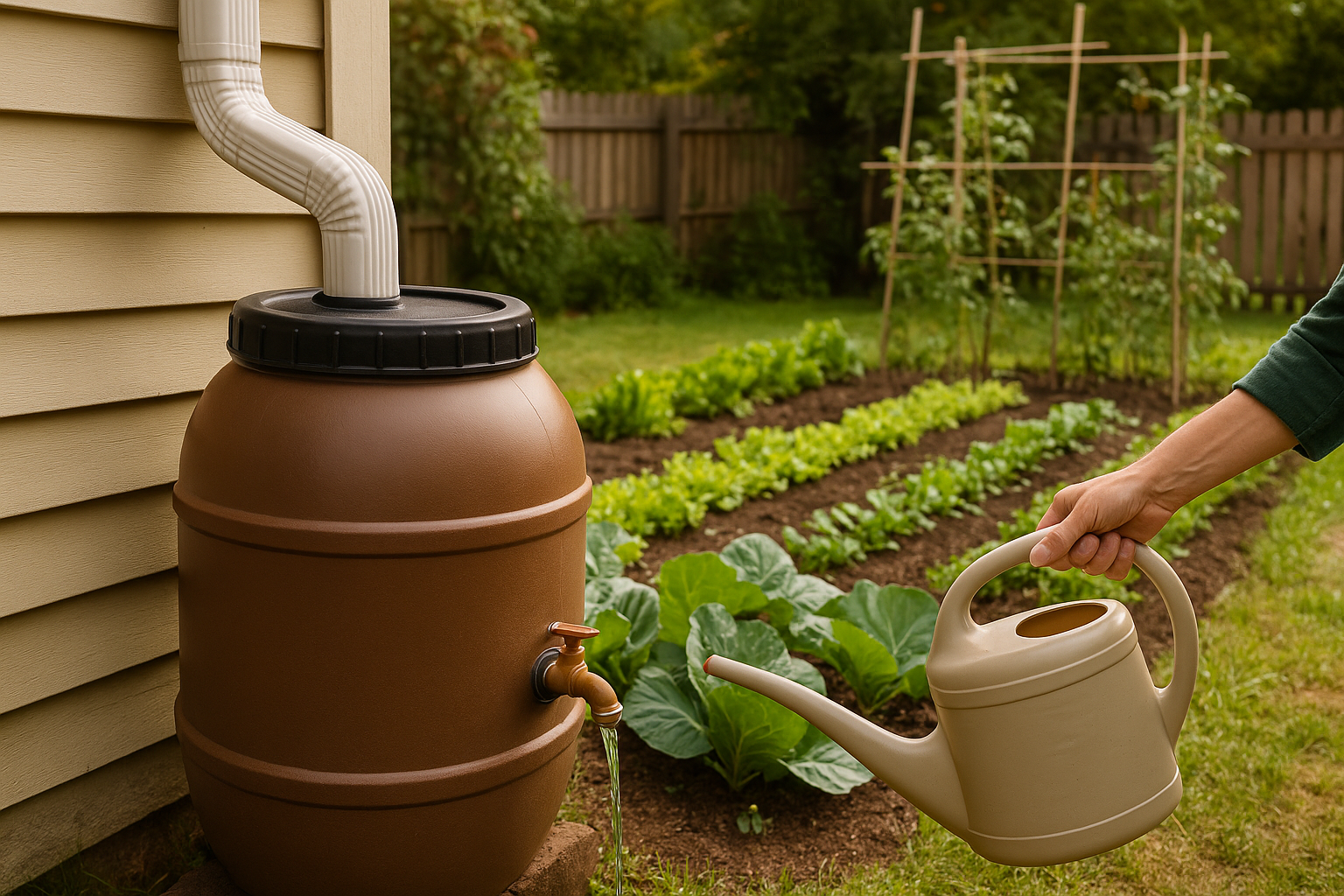
Place the storage container close to a downspout and near the garden when practical. A shorter watering route reduces hose friction, simplifies maintenance, and makes the system easier to use. The location should remain accessible for inspecting connections and cleaning the container.
Stored water is heavy. One gallon weighs about 8.34 pounds, so even 50 gallons weighs more than 400 pounds before including the container. Set the tank or barrel on a level, stable base that can support its full weight without settling. Do not place it on loose soil, an unstable stack of blocks, or a deck that has not been evaluated for the load.
If you elevate the container to improve gravity flow, use a strong, level platform designed for the filled weight. Secure the container where children, pets, high winds, or accidental impacts could create a tipping hazard. Keep every access opening covered.
Select an Appropriate Container
Use a durable, watertight container made from material suitable for water storage. An opaque container is preferable because blocking sunlight slows algae growth. Avoid containers that previously held fuel, pesticides, solvents, cleaners, or other hazardous materials. Residue may remain even after repeated washing.
A practical garden storage container needs:
- A screened inlet that keeps out leaves, insects, and animals
- A tight lid or sealed top opening
- An outlet positioned above the bottom sediment layer
- An overflow outlet sized to handle incoming stormwater
- A drain or access point for periodic cleaning
All openings should be secured with fine, intact screening to prevent mosquitoes from reaching the water. Check screens regularly because tears, gaps, and loose fittings can make an otherwise closed system ineffective.
Build a Clean Collection Path
Roof runoff carries dust, pollen, leaves, bird droppings, and roofing debris. Keeping the collection path clean reduces the amount of material entering storage.
- Inspect the roof. Avoid collecting from surfaces with deteriorating lead paint, freshly applied chemical treatments, or materials that may release unwanted contaminants.
- Clean the gutters. Remove accumulated leaves, nests, and sediment, then confirm that water flows toward the chosen downspout.
- Screen large debris. Install a secure gutter or inlet screen that can be removed for cleaning.
- Divert the first runoff. A first-flush arrangement sends the initial, dirtier portion of roof runoff away from storage. Empty or maintain it as required by its design.
- Connect the inlet. Make sure fittings are watertight and cannot pull loose when water flows rapidly.
- Direct the overflow. Route excess water away from foundations, neighboring property, septic areas, and erosion-prone soil.
Never create a direct, unprotected connection between stored rainwater and household drinking-water plumbing. Such a connection can allow nonpotable water to enter the potable supply.
Protect Garden Water Quality
Rainwater quality depends on the catchment surface, surrounding environment, storage conditions, and maintenance. If your roof contains questionable materials, ask the roofing manufacturer or an appropriate local authority whether its runoff is suitable for irrigating edible plants.
Apply stored rainwater directly to the soil rather than spraying edible leaves, especially crops eaten raw. Drip lines, watering wands used near the soil, or careful hand watering can limit contact with harvestable portions. Stop using water that has a strong chemical odor, an oily film, or evidence of contamination until the source is identified and the system is cleaned.
Do not add household bleach, algaecides, or other chemicals casually. Treatment amounts and safety depend on water quality, intended use, container volume, and local guidance. Physical prevention—an opaque tank, covered openings, clean gutters, and regular turnover—is the better starting point for a garden system.
Maintain the System Throughout the Season
Inspect the system after major storms and at regular intervals. Maintenance is easier when debris is removed before it decomposes or blocks water flow.
- Clear leaves and sediment from gutters and inlet screens.
- Confirm that lids, screens, and fittings remain secure.
- Look for leaks, bulging, rust, cracking, or movement in the base.
- Check that the overflow drains freely without causing erosion.
- Empty sediment and clean the interior when buildup becomes noticeable.
- Make sure mosquitoes cannot enter through the overflow, inlet, or lid.
When cleaning, disconnect incoming water, drain the container to an appropriate location, remove sediment, and rinse the interior. Follow the container maker's cleaning instructions when available. Never enter a tank; confined spaces can be dangerous.
Use Stored Water Efficiently
Water early in the day and direct moisture to plant roots. Mulch can reduce surface evaporation and help the soil stay evenly moist. Use stored rainwater first when more rain is expected, creating capacity for the next storm.
Gravity-fed systems provide only limited pressure, particularly as the water level falls. Keep hoses short, avoid unnecessary elevation changes, and choose irrigation methods that can operate at low pressure. If flow slows unexpectedly, check for a clogged screen, kinked line, closed vent, or sediment around the outlet.
Prepare for Freezing Weather
In freezing climates, drain exposed containers, hoses, valves, and fittings before temperatures remain below freezing. Water expands when frozen and can split containers or damage connections. Disconnect the downspout or redirect winter runoff so it does not create ice near walkways or foundations.
Where year-round storage is practical, follow local cold-weather construction requirements and the container maker's limitations. Continue checking the overflow during wet seasons, even when the garden is dormant.
Start Simple and Improve With Experience
A reliable rainwater system begins with a clean catchment, stable storage, screened openings, and controlled overflow. Start with a capacity you can maintain, observe how quickly your garden uses the water, and adjust the system as needed. Thoughtful placement and routine inspection will make stored rainwater a useful part of a small, self-sufficient garden.