Build a Safer, More Resilient Home
Power outages can disrupt lighting, refrigeration, communication, heating or cooling, and other everyday household needs. Some outages last only a short time, while others can continue for much longer.
You do not need an expensive emergency system to prepare. Start with the risks most relevant to your area and household, then build your supplies and practical backup plans gradually.
The following ten steps provide a practical foundation for handling power outages and other common household emergencies.
1. Make a Household Emergency Plan
Write down what each person should do when the power goes out, a storm approaches, or local officials issue an evacuation order. Choose two meeting places: one near your home and another outside your neighborhood. Identify an out-of-area contact who can help family members reconnect if local networks are overloaded.
Include plans for children, older adults, pets, livestock, and anyone with mobility, sensory, or medical needs. Keep paper copies of important phone numbers, utility contacts, insurance information, and evacuation routes. Review the plan at least twice a year and whenever household circumstances change.
2. Store a Reliable Water Supply
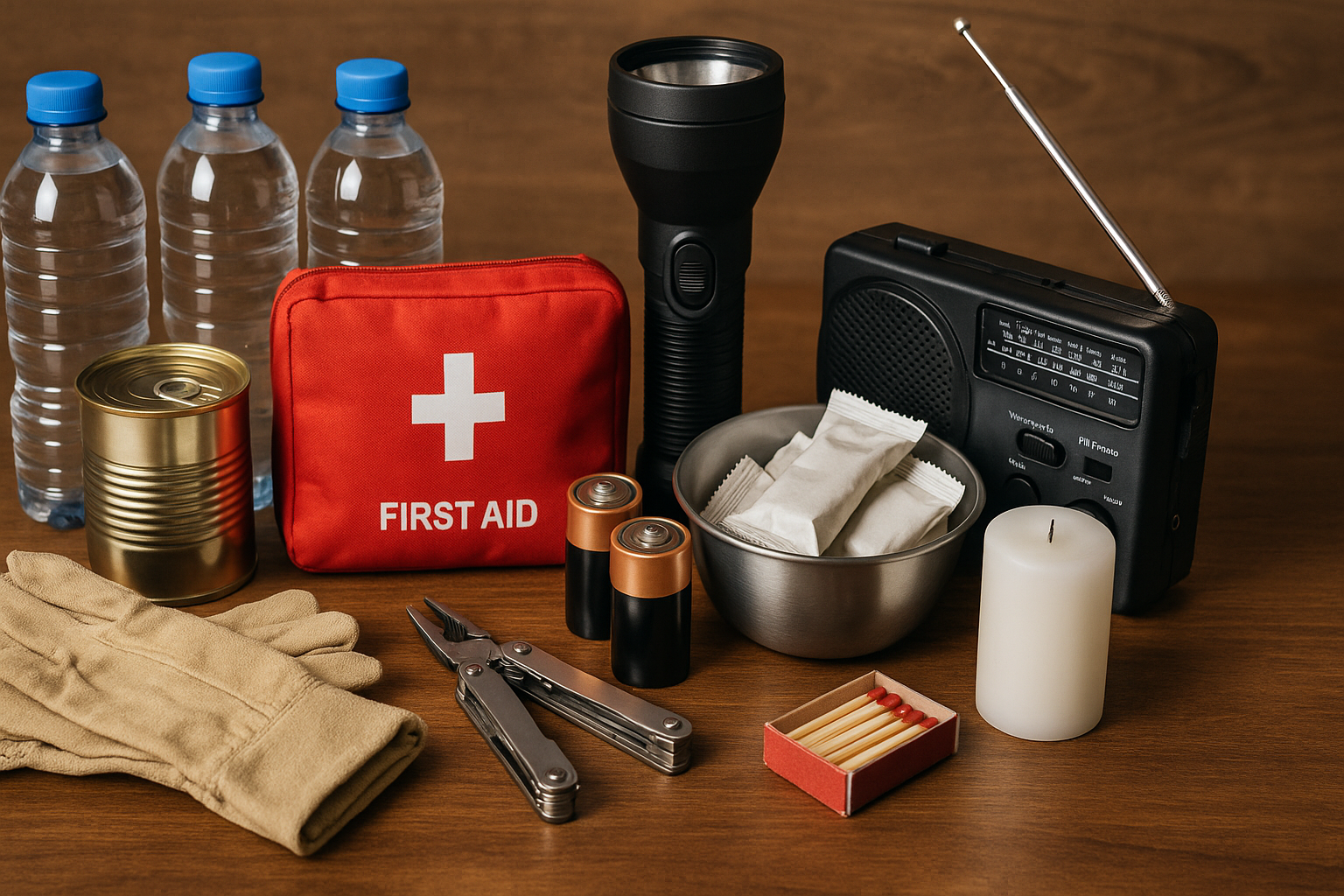
Municipal water systems can be affected by power failures, flooding, or damaged infrastructure. Private wells generally stop pumping when electricity is unavailable unless they have backup power. Store at least one gallon of water per person per day for several days, with additional water for pets, cooking, and hot climates.
- Use food-grade containers or commercially sealed bottled water.
- Label containers with the storage date and rotate them as recommended.
- Keep water in a cool location away from fuels, pesticides, and direct sunlight.
- Store a manual filtration method or appropriate purification supplies as a backup.
If officials issue a boil-water or do-not-use notice, follow their instructions. Filtration alone does not remove every possible contaminant.
3. Build a Shelf-Stable Food Reserve
Stock foods your household already eats rather than buying unfamiliar emergency meals. Useful options include canned beans, vegetables, fruit, soup, fish, nut or seed butter, crackers, oats, dried fruit, and shelf-stable milk. Consider dietary restrictions and choose foods that require little water or cooking.
Keep a manual can opener with your supplies. Rotate food through normal meals so it does not sit forgotten. During an outage, keep refrigerator and freezer doors closed. A refrigerator generally keeps food cold for about four hours if unopened, while a full freezer can maintain its temperature for roughly 48 hours and a half-full freezer for about 24 hours. When in doubt about food safety, discard questionable items rather than tasting them.
4. Choose Safe Emergency Lighting
Place LED flashlights, headlamps, and battery-powered lanterns in easy-to-reach locations. Headlamps are especially useful because they leave both hands free for cooking, repairs, or caring for children. Store compatible spare batteries and check them periodically for corrosion or expiration.
Rechargeable lights can reduce long-term battery costs, but include at least one option that does not depend on the electrical grid. Avoid relying on candles. Open flames increase the risk of burns and house fires, particularly around children, pets, curtains, and combustible emergency supplies.
5. Prepare for Communication Disruptions
Keep phones and portable battery banks charged when severe weather is forecast. A car charger can provide another option, but never run a vehicle inside a garage, even with the garage door open. Conserve phone power by lowering screen brightness, closing unnecessary apps, and using text messages when calls cannot connect.
Add a battery-powered or hand-crank weather radio to your kit so you can receive official alerts when internet or cellular service is unavailable. Write down key information rather than assuming it will remain accessible online. If local authorities use emergency notification systems, enroll before an incident occurs.
6. Use Backup Power Safely
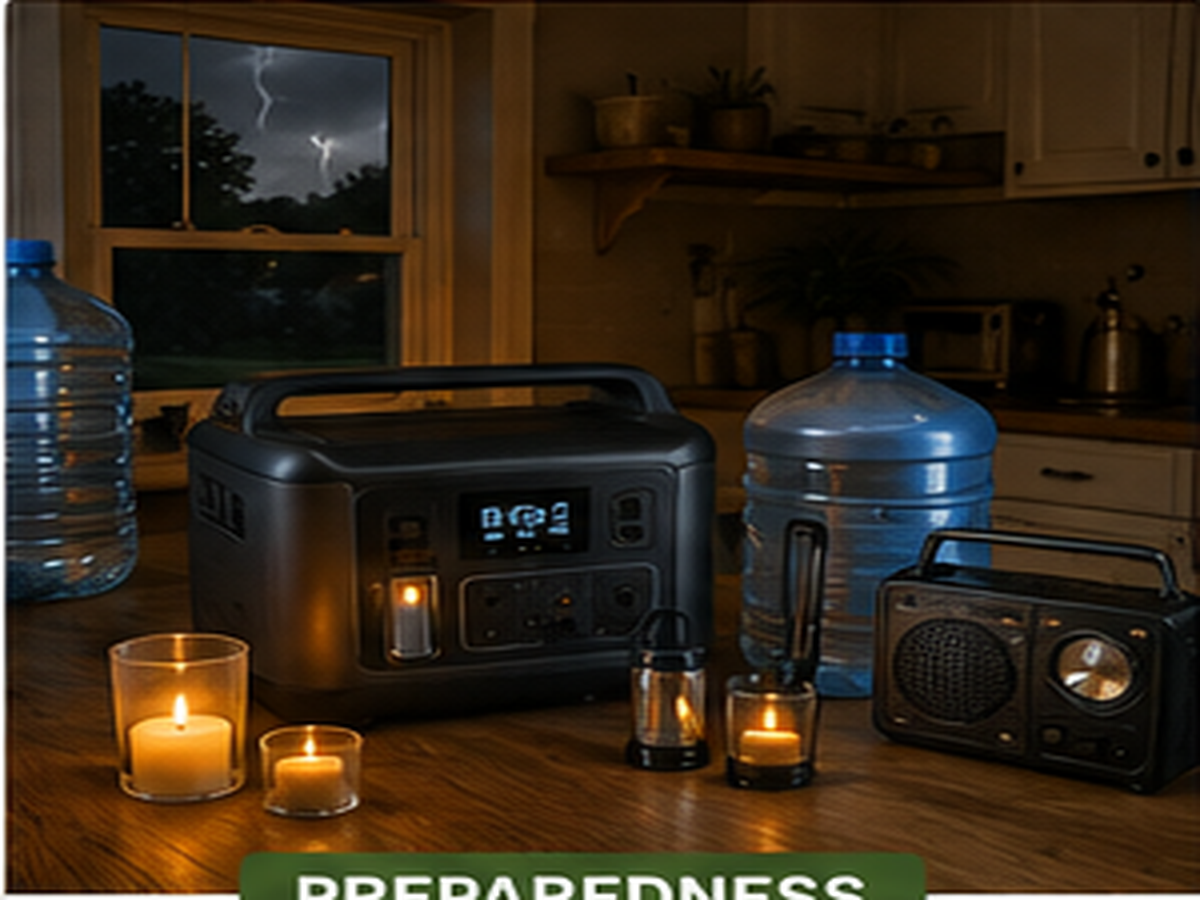
Portable power stations can run small electronics, lights, and certain appliances within their rated capacity. Compare battery capacity and output with the wattage and startup demands of the devices you intend to operate. Solar panels may help recharge some systems, although performance depends on weather, panel size, and available sunlight.
Portable generators require strict safety precautions. Operate a fuel-burning generator outdoors, far from doors, windows, vents, and attached structures, following the manufacturer’s required clearances. Never use one in a house, basement, shed, or garage. Carbon monoxide is colorless and odorless and can build up quickly.
Do not connect a generator directly to a household outlet. This practice, known as backfeeding, can injure utility workers and damage equipment. Have a qualified electrician install an approved transfer switch or interlock when connecting backup power to home circuits.
7. Install and Test Safety Devices
Every home should have working smoke alarms and carbon monoxide alarms in appropriate locations. Test them regularly, replace batteries as directed, and replace the devices at the end of their service life. Backup batteries are important because hardwired alarms may lose normal power during an outage.
Keep suitable fire extinguishers accessible near kitchens, workshops, and other higher-risk areas. Household members should know where utility shutoffs are located, but gas should only be turned off when instructed or when there is a clear emergency. A gas utility or qualified professional may need to restore service.
8. Plan for Heating and Cooling
Loss of heating or air conditioning can become more serious than the loss of lighting. Prepare seasonal supplies such as layered clothing, blankets, sleeping bags, sunshades, battery-powered fans, and insulated window coverings. During hot weather, close blinds on sunny windows and move activities to the coolest safe part of the home. During cold weather, gather in one room and block drafts without obstructing required ventilation.
Never use an oven, outdoor grill, camp stove, or unvented combustion device to heat your home. Know where nearby warming or cooling centers are located, and be ready to relocate if indoor temperatures become unsafe.
9. Organize Medications, First Aid, and Sanitation
Maintain a basic first-aid kit and a reasonable supply of essential medications, following prescription rules and storage requirements. Ask a pharmacist or health care professional how temperature-sensitive medicine should be handled during an outage. Anyone who depends on powered medical equipment should work with the equipment provider and utility to develop a specific backup plan.
Store soap, hand sanitizer, toilet paper, heavy-duty trash bags, disinfecting supplies, menstrual products, diapers, and pet waste supplies. If water service fails, sanitation can quickly become difficult. Learn an appropriate emergency toilet method before it is needed, and follow local disposal guidance.
10. Create Accessible Kits and Practice Using Them
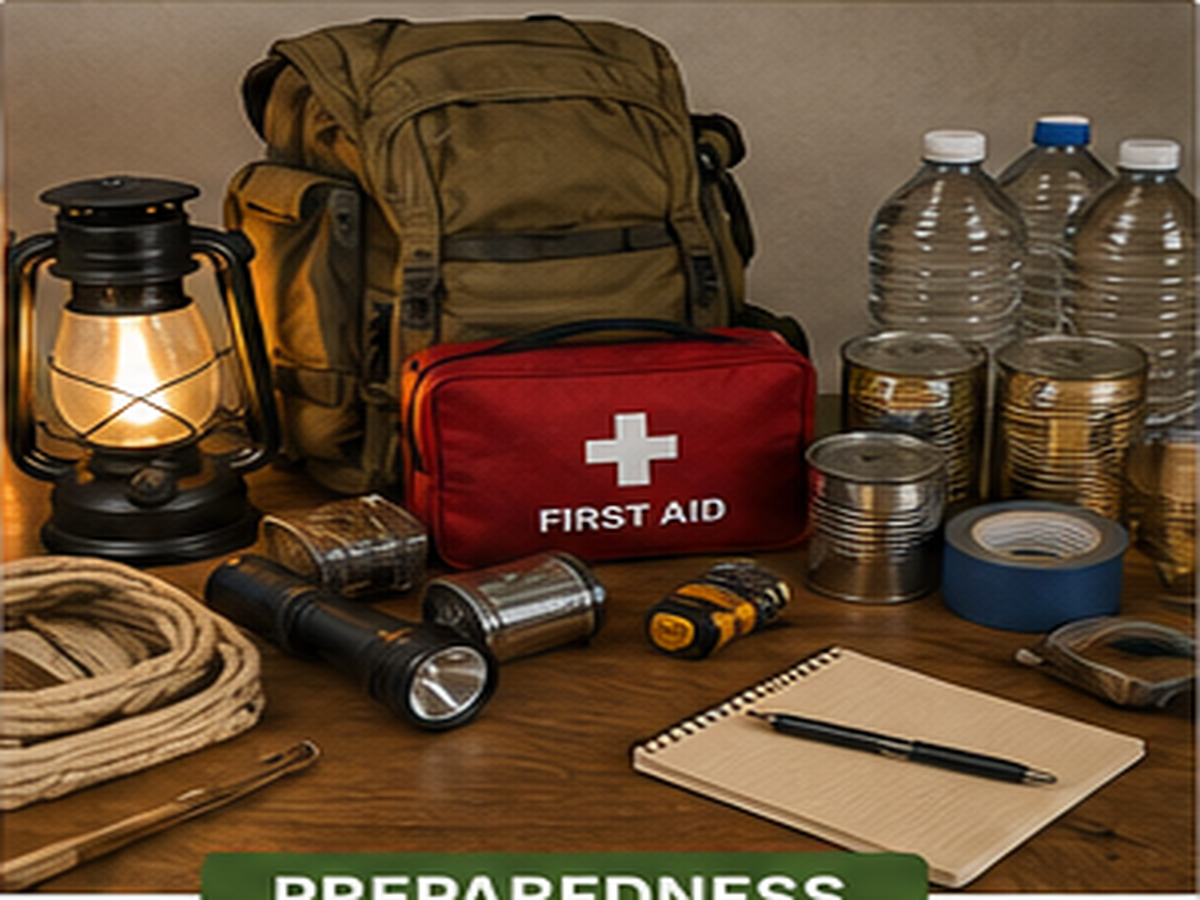
Organize supplies in labeled, portable containers rather than scattering them throughout the house. Keep frequently used items where they can be reached in the dark. In addition to a home kit, prepare smaller bags for evacuation and basic kits for vehicles.
Inspect supplies every six months. Charge batteries, rotate food and water, update documents, test equipment, and replace damaged items. Practice a short evening without household electricity to identify overlooked needs. You may discover that a flashlight is difficult to find, a power bank cannot operate a needed device, or family members do not know how to open the garage door manually.
Prepare Gradually and Prioritize Safety
Emergency readiness is more manageable when approached one step at a time. Begin with water, food, lighting, communications, and a household plan. Then add backup power, seasonal protection, sanitation supplies, and specialized items based on your location and family needs.
The best preparations are simple, tested, and easy to maintain. By safely storing essential supplies and practicing how to use them, you can make power outages less disruptive and respond more confidently when an emergency occurs.