Plan for More Than a Few Hours Without Electricity
A long power outage can affect much more than lights and appliances. Refrigeration may stop, communication can become difficult, fuel may be harder to obtain, and water or other household services can be disrupted.
Preparing in advance gives your household more options when the electricity is unavailable. Start by considering what you would need to manage comfortably for several days, then build your supplies and backup systems gradually.
Focus first on essential needs such as safe water, food, lighting, communication, temperature control, and basic household safety. Your plan can then grow as your budget, space, and experience allow.
Consider the season, local hazards, household size, medical needs, pets, and whether your home relies on an electric well pump, heating system, stove, or water heater.
Store a Practical Emergency Water Supply
Keep at least one gallon of water per person per day for drinking and basic sanitation. Store more for hot weather, pregnancy, illness, pets, or physically demanding work. A three-day supply is a useful starting point, but a one- to two-week supply offers better protection during an extended outage.
- Use food-grade containers or commercially bottled water.
- Store water in a cool, dark place away from chemicals and fuel.
- Label containers with the storage date and rotate them periodically.
- Keep a gravity-fed water filter and an appropriate disinfection method as backups.
- If you rely on a well, plan how you will obtain water when the electric pump is unavailable.
Do not assume that nearby streams, rain barrels, pools, or hot water tanks provide safe drinking water. Water from uncertain sources may require filtration and disinfection. Follow current guidance from local public health authorities or the Centers for Disease Control and Prevention.
Build a No-Cook Food Supply
Choose shelf-stable foods your household already eats. Useful options include canned beans, fish, meat, fruit, vegetables, nut butter, crackers, cereal, dried fruit, shelf-stable milk, and ready-to-eat meals. Include a manual can opener, disposable plates, and utensils to reduce water use.
Keep refrigerator and freezer doors closed during an outage. A closed refrigerator generally maintains safe temperatures for only a limited time, while a full freezer stays cold longer than a half-empty one. Appliance thermometers make it easier to determine whether food has remained at a safe temperature. When in doubt, discard questionable food rather than tasting it.
Camp stoves, charcoal grills, and similar equipment must never be used indoors, in garages, or near doors and windows. They produce carbon monoxide, an invisible and potentially deadly gas. Cook outdoors in a well-ventilated location according to the manufacturer's instructions.
Choose Backup Power Carefully
Portable Power Stations
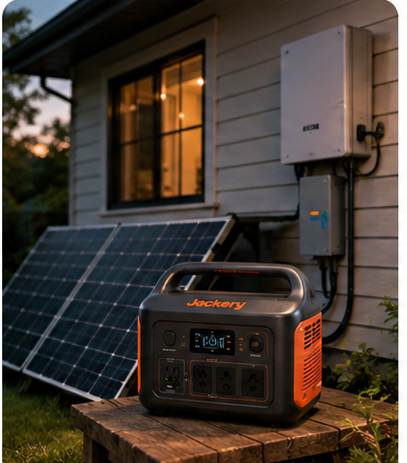
Rechargeable power stations can run phones, lights, radios, internet equipment, and some medical or household devices. Compare battery capacity and output with the actual wattage and startup surge of anything you intend to power. Test the system before an emergency and recharge it regularly. Solar panels can extend runtime, although charging depends on the weather, panel size, and available sunlight.
Generators
A generator can support larger loads, but it requires careful installation and operation. Run portable generators outdoors, at least 20 feet from the home, with the exhaust directed away from windows, doors, and vents. Never operate one in a house, basement, shed, crawl space, or attached garage.
Install battery-powered carbon monoxide alarms or alarms with battery backup on every level and near sleeping areas. Store fuel in approved containers away from living spaces and ignition sources. Never refuel a hot or running generator. To power household circuits, use a professionally installed transfer switch or interlock that meets local codes. Plugging a generator into a wall outlet can backfeed utility lines and endanger workers and neighbors.
Prepare for Lighting, Heating, and Cooling
Place LED flashlights, headlamps, lanterns, and spare batteries in easy-to-find locations. Headlamps are especially useful because they leave both hands free. Avoid candles when possible because they pose a fire risk.
For cold-weather outages, weatherstrip doors and windows, close curtains at night, and gather everyone in a smaller interior area. Keep warm layers, hats, sleeping bags, and blankets available. Do not use an oven, grill, or unvented combustion appliance to heat the home. If indoor temperatures become unsafe, relocate to a designated warming center or another secure location.
During hot weather, close blinds on sunny windows, create cross-ventilation when outdoor conditions allow, and use battery-powered fans. Drink water regularly and limit strenuous activity. Identify cooling centers and alternative lodging before an emergency, particularly for older adults, infants, and people with health conditions that affect temperature tolerance.
Maintain Communication and Essential Information
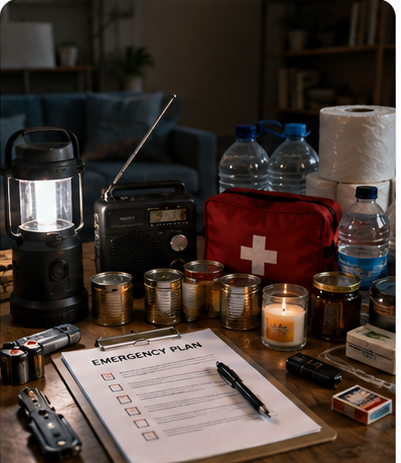
Keep a battery-powered or hand-crank radio for official alerts. Store charged power banks with compatible cables, and consider keeping one phone turned off when it is not needed. Text messages may work when voice calls do not, but avoid unnecessary network use during a regional emergency.
Print important information so that it remains available without internet access. Include family contacts, medication lists, insurance details, utility numbers, evacuation routes, shelter locations, and instructions for operating backup systems. Keep some cash in small bills because card readers and ATMs may not work.
Address Medical, Sanitation, and Pet Needs
Ask a medical provider or equipment supplier how to prepare if anyone depends on refrigerated medication, powered medical equipment, or regular treatments. Confirm the power requirements of each device and develop more than one backup option. Register for local emergency assistance programs if available, but do not rely on those programs as your only plan.
Stock soap, hand sanitizer, toilet paper, trash bags, disinfectant, menstrual products, diapers, and other household necessities. If water or sewer service might fail, research a safe emergency toilet setup and local waste disposal guidance in advance.
Include pets and livestock in your planning. Store food, water, medications, carriers, leashes, identification records, and sanitation supplies. Know which evacuation locations accept animals.
Protect Appliances and Home Systems
Use high-quality surge protectors for sensitive electronics, and consider having an electrician install whole-home surge protection. When an outage begins, unplug unnecessary electronics to reduce the risk of damage from surges when service returns. Leave one lamp switched on so that you know when power has been restored.
Learn how to safely shut off water, gas, and electricity, but do so only when conditions require it. If you smell gas, leave the area immediately and contact the gas utility or emergency services from a safe location. Do not attempt repairs yourself.
Create and Practice a Household Outage Plan
Equipment is useful only if household members know where it is and how to operate it. Review your plan twice a year and, if it is safe to do so, conduct a short practice outage by switching off nonessential circuits for several hours.
- Assign responsibility for water, food, pets, medical supplies, and communication.
- Test alarms, flashlights, batteries, power stations, and generators.
- Replace expired food and medications, refresh stored fuel, and service or replace fire extinguishers as needed.
- Confirm that generator cords and transfer equipment are properly rated.
- Update contact lists and check on neighbors who may need help.
- Know when you will stay home and what conditions would trigger an evacuation.
Preparing in stages makes the project manageable. Begin with water, food, lighting, communication, and carbon monoxide safety. Then add backup power, weather protection, and longer-term supplies. A well-maintained plan can help your household make calm, informed decisions when the electrical grid is unavailable.