Save Water While Strengthening Your Home Supply
A reliable home water system does more than deliver water from a faucet. It should minimize waste, protect water quality, provide some backup capacity, and remain easy to inspect and maintain. You do not need to rebuild your plumbing to make meaningful improvements. Start with the simplest conservation measures, then add storage and alternative water sources as your budget and local conditions allow.
The following ten steps can help households on municipal water, private wells, or a combination of sources. Before modifying plumbing, collecting rainwater, or reusing graywater, check local building, health, and water-use regulations.
10 Practical Ways to Improve Household Water Security
1. Measure How Much Water You Use
You cannot manage water effectively without knowing where it goes. Review several months of utility bills and compare average use with unusually high periods. If you have a private well, consider installing a flow meter or using fixture estimates to create a basic household water budget.
List major uses such as toilets, showers, laundry, irrigation, livestock, and food production. This simple audit helps you focus on changes that will produce the greatest savings. It can also reveal seasonal patterns and unexpected increases that may indicate leaks.
2. Find and Repair Leaks Promptly
A slow leak can waste a surprising amount of water over time. Check faucets, toilet tanks, exposed pipes, outdoor spigots, irrigation valves, pressure tanks, and water heaters. Damp cabinets, unexplained pump cycling, reduced water pressure, or wet patches in the yard may signal hidden problems.
To check for a whole-house leak, turn off water-using fixtures and appliances, then observe the water meter. Movement may indicate water is still flowing. Toilet leaks can often be identified by placing a few drops of food coloring in the tank and waiting to see whether color appears in the bowl without flushing. Repair simple leaks yourself when appropriate, but use a qualified plumber or well professional for concealed or pressurized system problems.
3. Install Water-Efficient Fixtures
Low-flow showerheads, faucet aerators, and efficient toilets can reduce consumption without requiring major lifestyle changes. Choose products that provide adequate performance at lower flow rates rather than simply restricting water.
When replacing appliances, compare water use as well as energy use. High-efficiency washing machines and dishwashers generally use less water per cycle than older models. Run full loads when possible, but do not overload appliances because poor cleaning may require a second cycle.
4. Change Everyday Water Habits
Small habits become substantial savings when repeated daily. Turn off the faucet while brushing teeth, shaving, or scrubbing dishes. Keep drinking water in the refrigerator instead of running the tap until it becomes cold. Wash produce in a bowl rather than under continuous flow, and use the leftover water on suitable plants if it contains no soap or harmful residue.
Shorter showers are usually more water-efficient than baths. In the kitchen, scrape plates instead of rinsing them heavily before loading the dishwasher. Outdoors, use a broom rather than a hose to clean walkways and patios.
5. Make Irrigation More Efficient
Outdoor watering can become one of the largest household water demands. Water plants early in the morning when evaporation is lower, and apply water directly to the root zone with drip tubing or soaker hoses. Inspect irrigation systems regularly for clogged emitters, broken lines, and overspray onto pavement.
Add mulch around trees, vegetables, and ornamental plants to slow evaporation and moderate soil temperature. Group plants with similar water needs, favor locally adapted species, and improve soil with appropriate organic matter. Deep, less frequent watering often encourages stronger roots, although the ideal schedule depends on soil, climate, and plant type.
6. Reuse Water Safely
Some lightly used household water, commonly called graywater, may be suitable for landscape irrigation where local rules permit it. Potential sources include certain laundry, shower, and bathroom sink drains. Graywater should not include toilet waste, kitchen sink water, or water contaminated with hazardous chemicals.
Use plant-friendly soaps, prevent human contact, and apply graywater below the soil surface when required. Do not use untreated graywater on edible portions of crops, and avoid storing it because pathogens and odors can develop. A professionally designed system is advisable if you plan to connect graywater directly to household plumbing.
7. Collect Rainwater for Non-Potable Uses
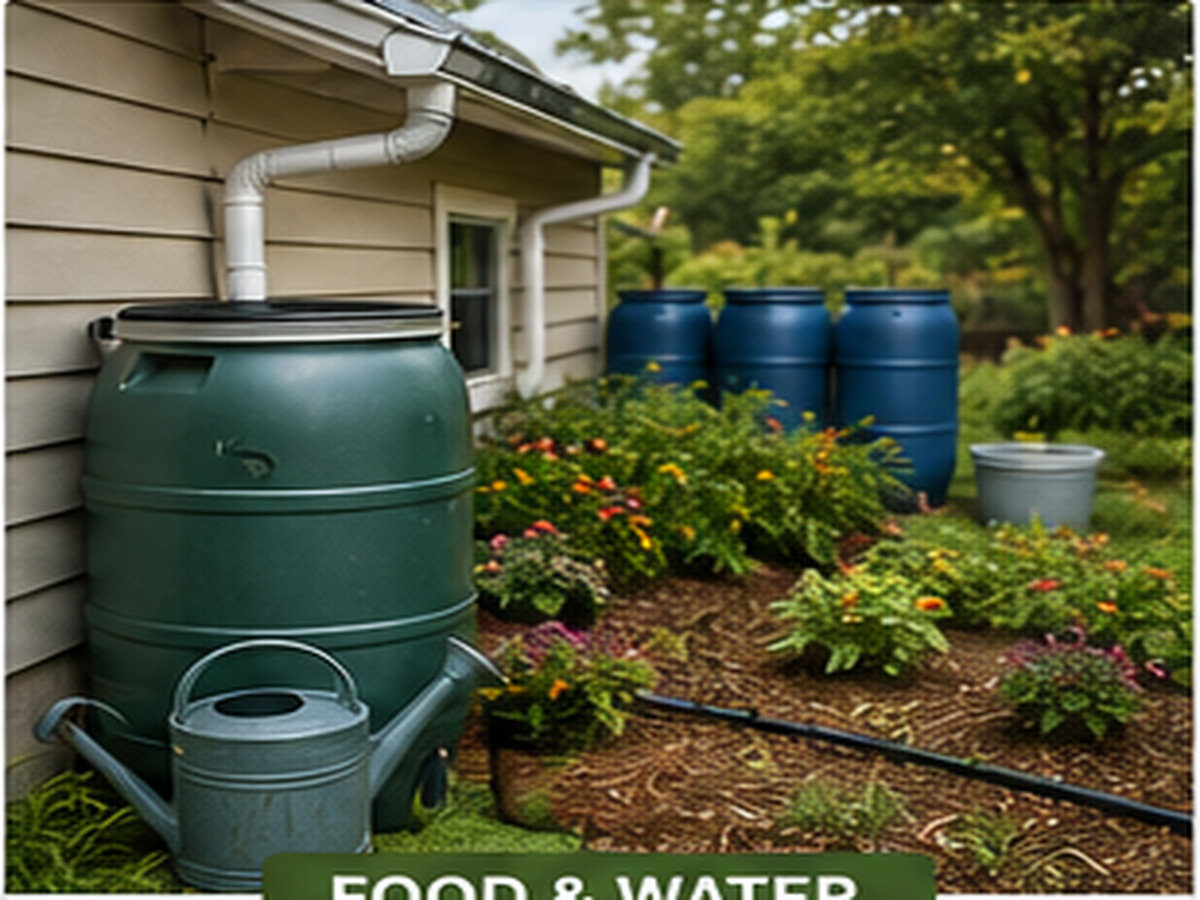
A rain barrel connected to a roof downspout can supply water for gardens, cleaning tools, or other permitted non-potable uses. Install a secure lid and insect screening, direct overflow away from the foundation, and place the barrel on a stable base. A first-flush device can divert some of the initial roof runoff, which may contain dirt and debris.
Larger cisterns can provide more capacity but require careful sizing, safe foundations, overflow planning, and backflow protection. Roof materials and local air quality affect collected water quality. Do not assume rainwater is safe to drink. Potable use generally requires suitable collection materials, treatment, testing, and compliance with local regulations.
8. Store an Emergency Water Supply
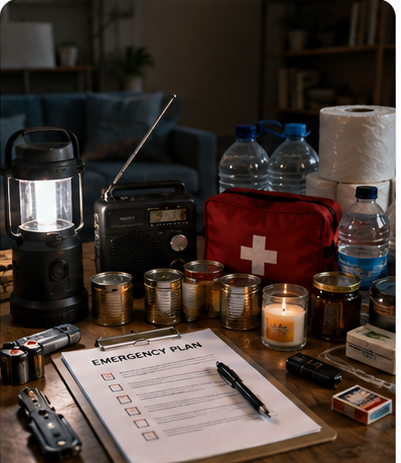
Stored water provides a basic buffer during utility interruptions, pump failures, contamination advisories, storms, or repairs. A common preparedness starting point is at least one gallon per person per day for several days, with additional water for pets, cooking, hygiene, hot climates, pregnancy, or medical needs.
Use food-grade water containers with tight-fitting lids. Label them with the filling date and store them in a cool, dark location away from fuel, pesticides, and other chemicals. Follow container or public health guidance for filling, rotating, and sanitizing supplies. Never use containers that previously held toxic substances.
9. Protect and Test Water Quality
Reliability includes safety as well as quantity. Municipal customers should review local water quality reports and follow official notices during service disruptions. Private well owners are responsible for protecting the wellhead and arranging appropriate testing. Testing needs vary by location, but may include bacteria, nitrates, minerals, or contaminants associated with nearby land uses.
Select treatment equipment based on test results rather than appearance or taste alone. Sediment filters, activated carbon, ultraviolet systems, softeners, and reverse osmosis units address different problems. No single device removes everything. Maintain equipment according to manufacturer instructions, and remember that boiling can kill many microorganisms but does not remove salts, fuel, heavy metals, or other chemical contaminants.
10. Create a Maintenance and Backup Plan
Document the location of the main shutoff valve, well controls, pressure tank, filters, pumps, and outdoor valves. Label components and make sure responsible household members know how to stop the water during a leak. Keep spare filter cartridges, plumbing repair clamps, washers, and other supplies appropriate for your system.
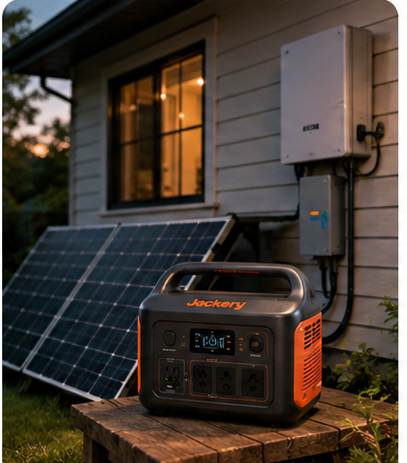
Schedule routine checks for storage tanks, gutters, screens, pumps, filters, treatment devices, and irrigation lines. If your home relies on an electric well pump, consider how you would access stored water during an outage. Any generator or backup power installation should be properly sized, safely operated, and connected according to electrical codes.
Build the System in Stages
Begin with an audit, leak repairs, and simple fixture upgrades. Next, improve outdoor watering and establish an emergency supply. Rainwater collection, graywater reuse, larger storage tanks, and treatment systems can be added later when they are practical and legal for your property.
The best home water system is not necessarily the most complicated. It is one that uses water carefully, protects it from contamination, includes a realistic backup, and receives regular attention. Consistent maintenance and thoughtful conservation can make your household better prepared without wasting money or water.